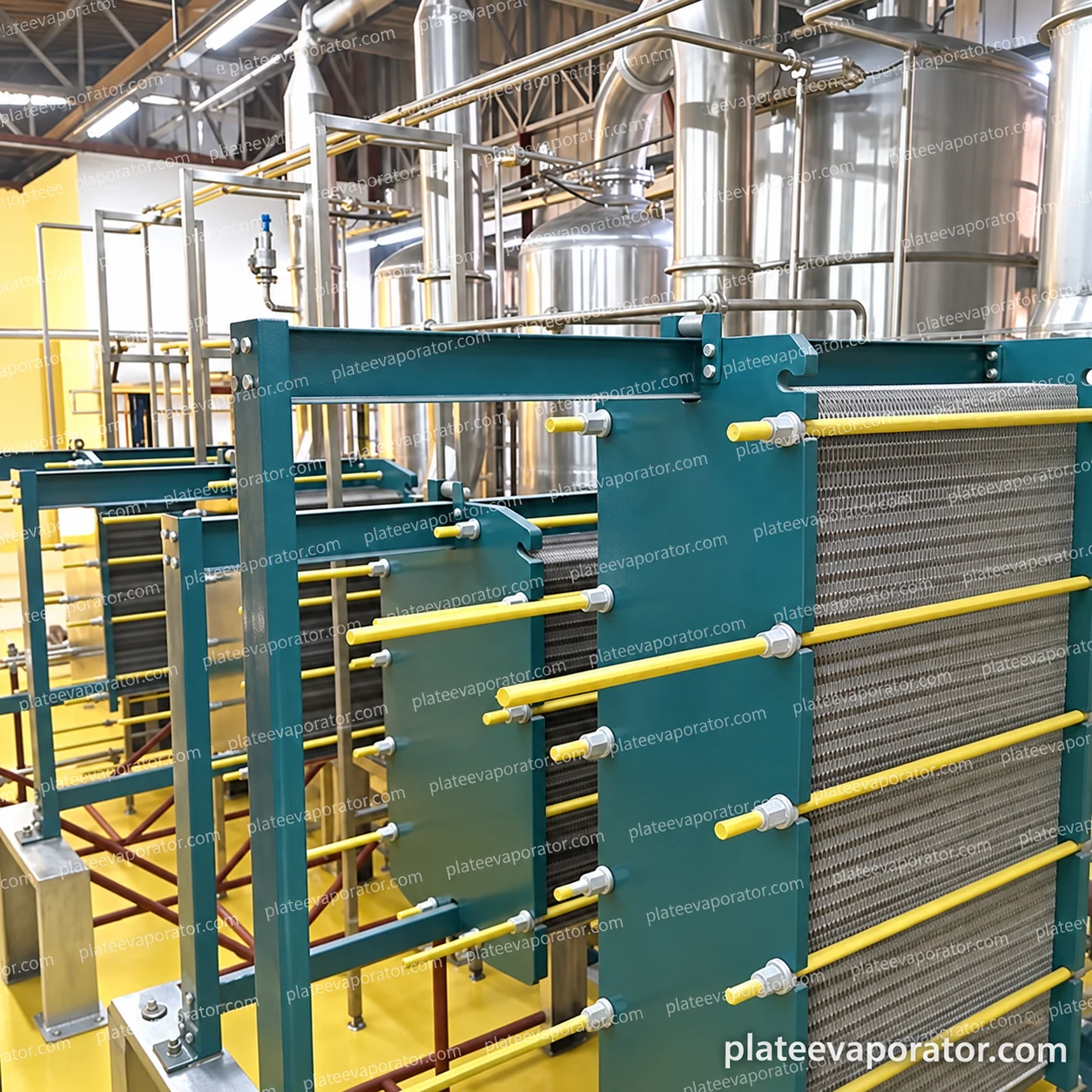
One effect, a complete evaporation circuit
The plate heating section supplies the energy for evaporation. The connected separator keeps concentrate on its liquid route while generated vapour proceeds toward condensation. Feed, concentrate and condensate pumps, a vacuum circuit and controls remain necessary parts of the system.
Single effect describes the thermal process arrangement. It does not mean one plate, one pump or an isolated heat exchanger. The equipment specification still covers the liquid and vapour paths, working temperatures, separation duty and cleaning connections.
When to compare a single effect
Compare this arrangement for a moderate water-removal duty, a relatively simple utility installation or production with changing liquids and operating schedules. A lower-complexity thermal arrangement can be useful, but the actual turndown and start-up sequence still need to suit the feed.
Unlike a multi-effect arrangement, the secondary vapour does not heat successive evaporation effects. Compare total operating demand at the intended duty rather than assuming that the simpler configuration always has the lowest lifecycle cost.
| Selection question | What it changes |
|---|---|
| How much water must be removed? | Heating and terminal vapour-handling duties |
| How frequently does the product change? | Start-up, drainage and cleaning sequence |
| What heating and cooling are available? | Achievable operating condition and utility interfaces |
Specify the duty before choosing area
Provide the liquid, feed flow and measurement basis, inlet concentration, target concentration and any temperature limit. Include suspended material, expected outlet viscosity and foaming. The surface area is selected from the thermal duty and product behaviour, rather than from feed flow alone.
The photographed plate frame illustrates actual construction; it is not a capacity-rated single-effect model. Materials, seals, instruments and access space belong to the configuration offered for your project.