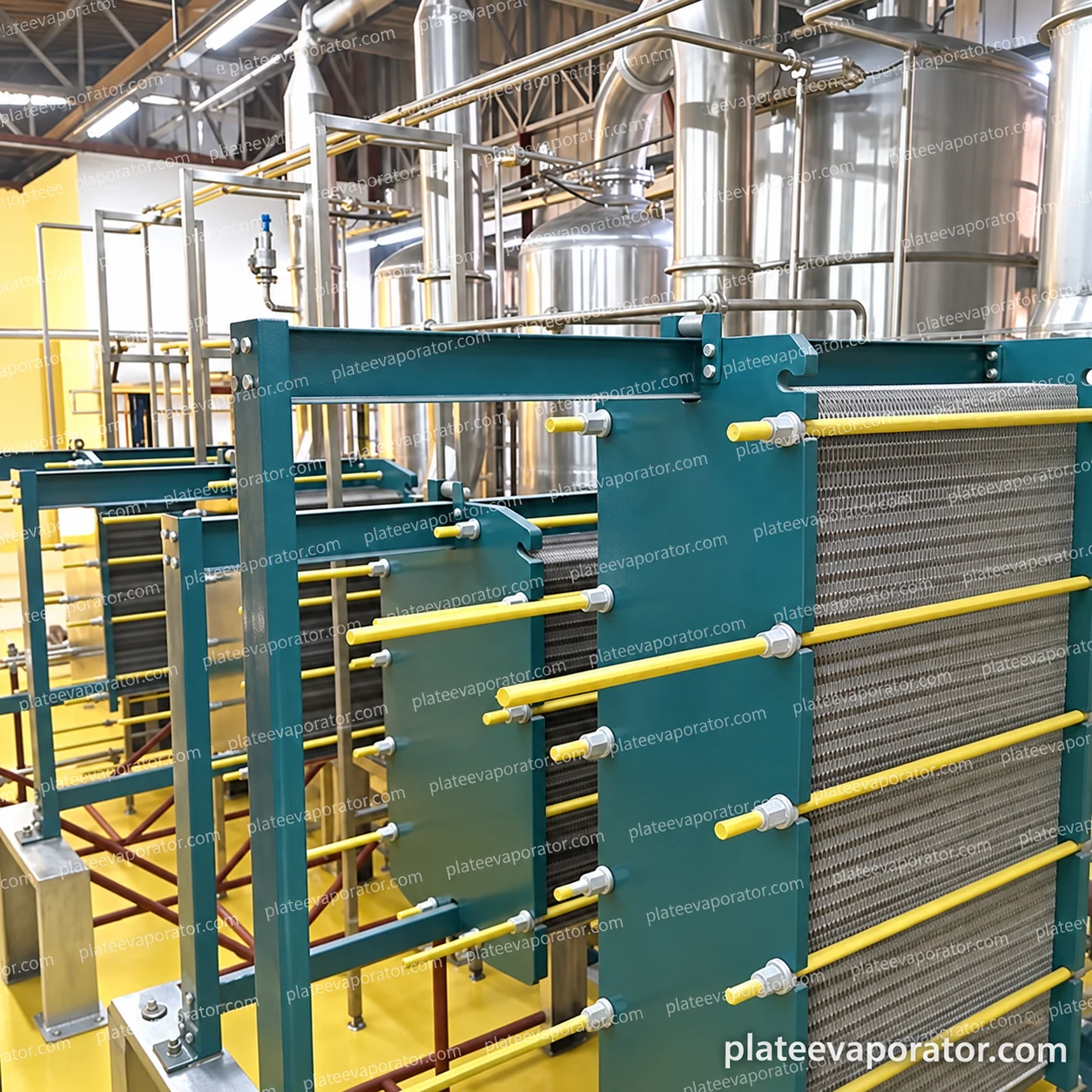
A simpler thermal arrangement
Single-effect plate evaporation
One evaporation effect. Compare for moderate water removal, changing products and a straightforward utility circuit.
Compare this configuration →FOOD & BEVERAGE CONCENTRATION EQUIPMENT
Concentrate prepared food liquids with a connected plate evaporation system. Choose the effect arrangement, utilities and cleaning scope around the product you actually process.
CHOOSE YOUR CONFIGURATION
Compare how the equipment uses heat. Effect count and TVR are selected with water removal, product behaviour and your available utilities.
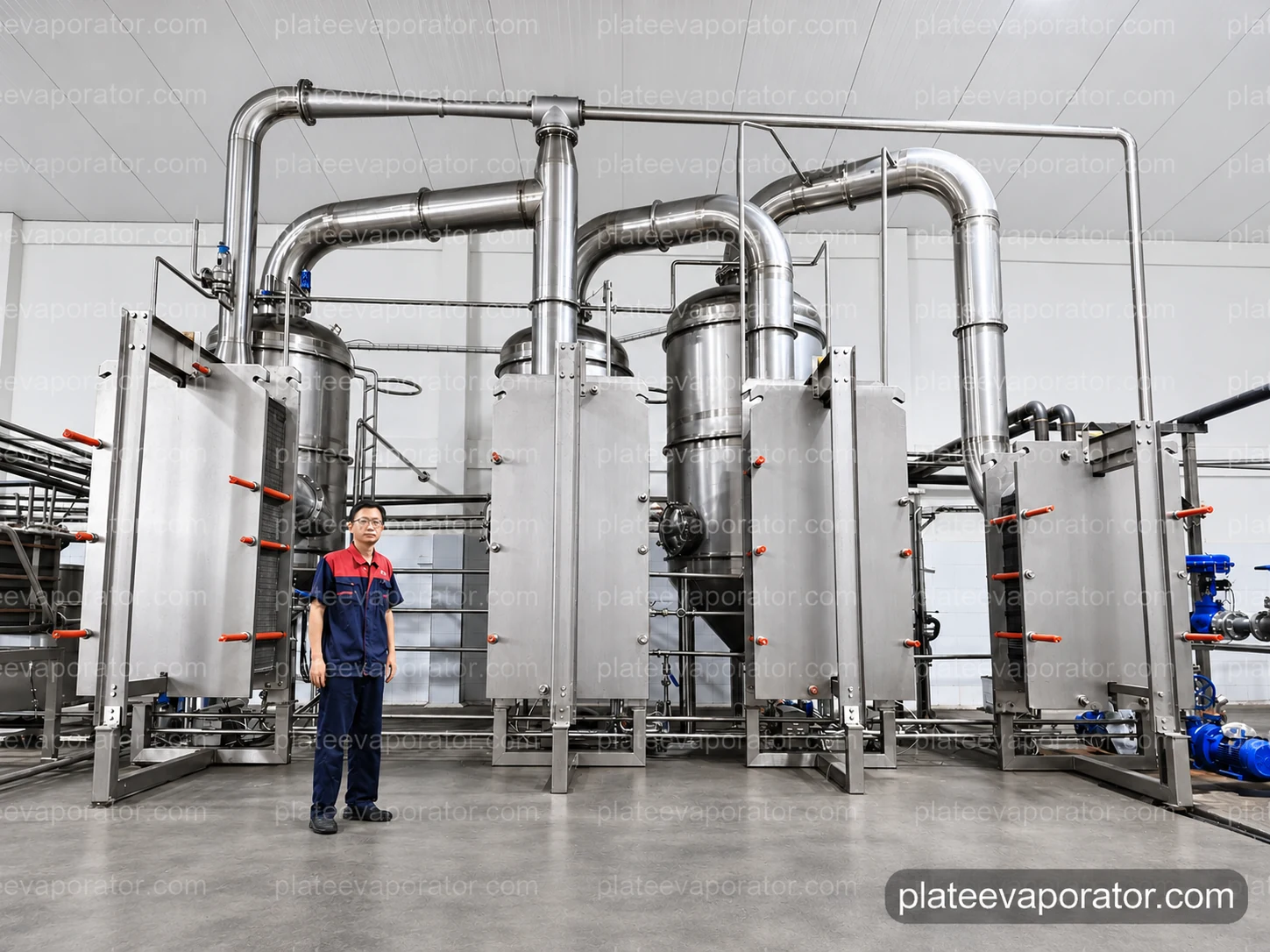
A simpler thermal arrangement
One evaporation effect. Compare for moderate water removal, changing products and a straightforward utility circuit.
Compare this configuration →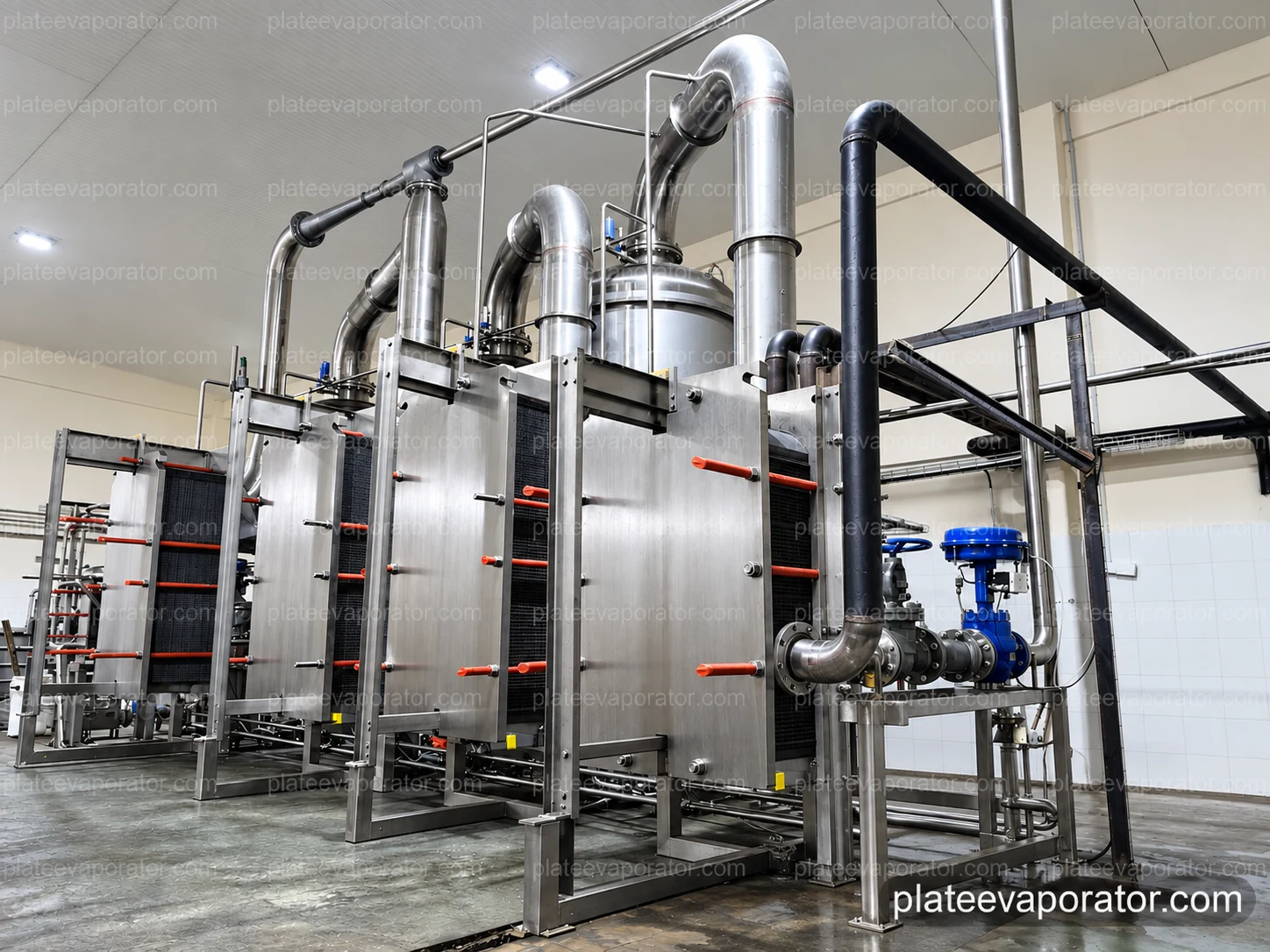
Reuse heat between effects
Successive effects reuse secondary vapour. Assess steam demand, the available temperature window and operating range.
Compare this configuration →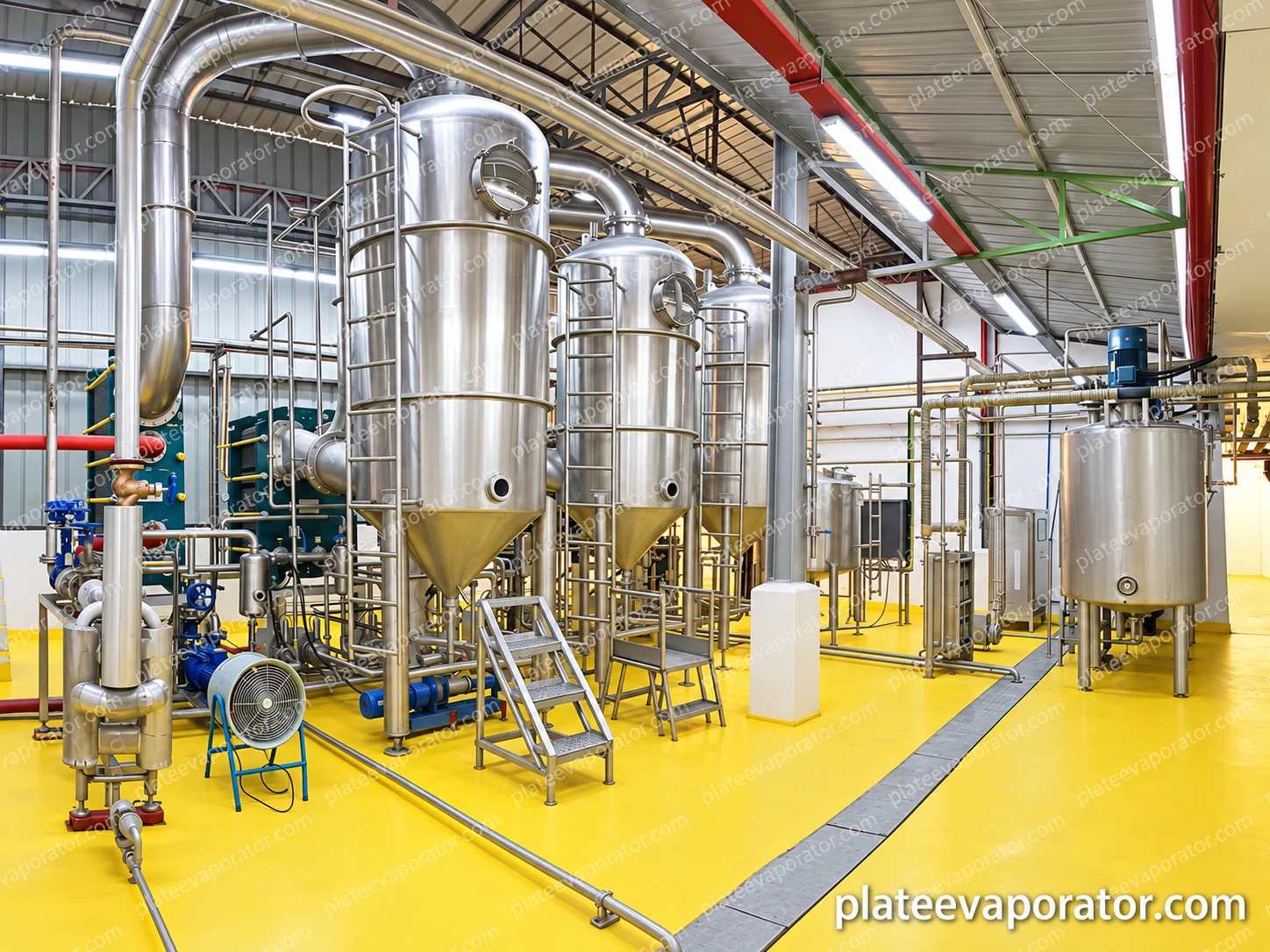
A steam-driven recovery option
A thermocompressor reuses part of the vapour. Select it with the motive-steam supply and the evaporation duty.
Compare this configuration →Looking at a three-effect arrangement? Explore two actual coconut water installation references.
Three-effect plate systems →START WITH YOUR LIQUID
Prepared, low-solid liquids are the starting point. Solids, viscosity, foaming and cleaning decide whether plate evaporation suits the whole concentration range.
Application selection →Clarification, oil traces and concentration targets. See two actual three-effect installations.
Aqueous juice with low pulp. Evaluate aroma, acidity and viscosity at the target concentration.
Protein and mineral behaviour, heat deposition and the product-specific cleaning route.
Prepared aqueous extracts. Define soluble components, residual solids and material compatibility.
Fine solids, volatile aroma and concentrate handling throughout the intended operating range.
Dissolved salts, acidity and residues guide the plate materials, seals and cleaning specification.
REAL EQUIPMENT. REAL PROCESS CONTEXT.
6,000 L/hIndonesia · reported water removal
3,700 L/hPhilippines · reported water removal with TVR
Project figures describe water-removal duties. They are references for these installations, rather than universal feed capacities.
Installed system · three-effect plate evaporation
At PT. PULAUMAS MOROMULIA in Indonesia, the documented configuration combines three-phase disc separation with a three-effect plate evaporation system. The July 2026 project record reports the installation commissioned and operating. Its 6,000 L/h rating describes evaporation water removal.
Explore the installation →Philippines · 2021 project
The ORIENTAL GOLDEN COCO installation in the Philippines uses an automatic three-effect plate evaporation system with TVR. The project record states a 4,000 L/h coconut water feed and a 3,700 L/h evaporation duty, with a concentration target from 4 to 60 Brix.
Explore the installation →A COMPLETE EVAPORATION PACKAGE
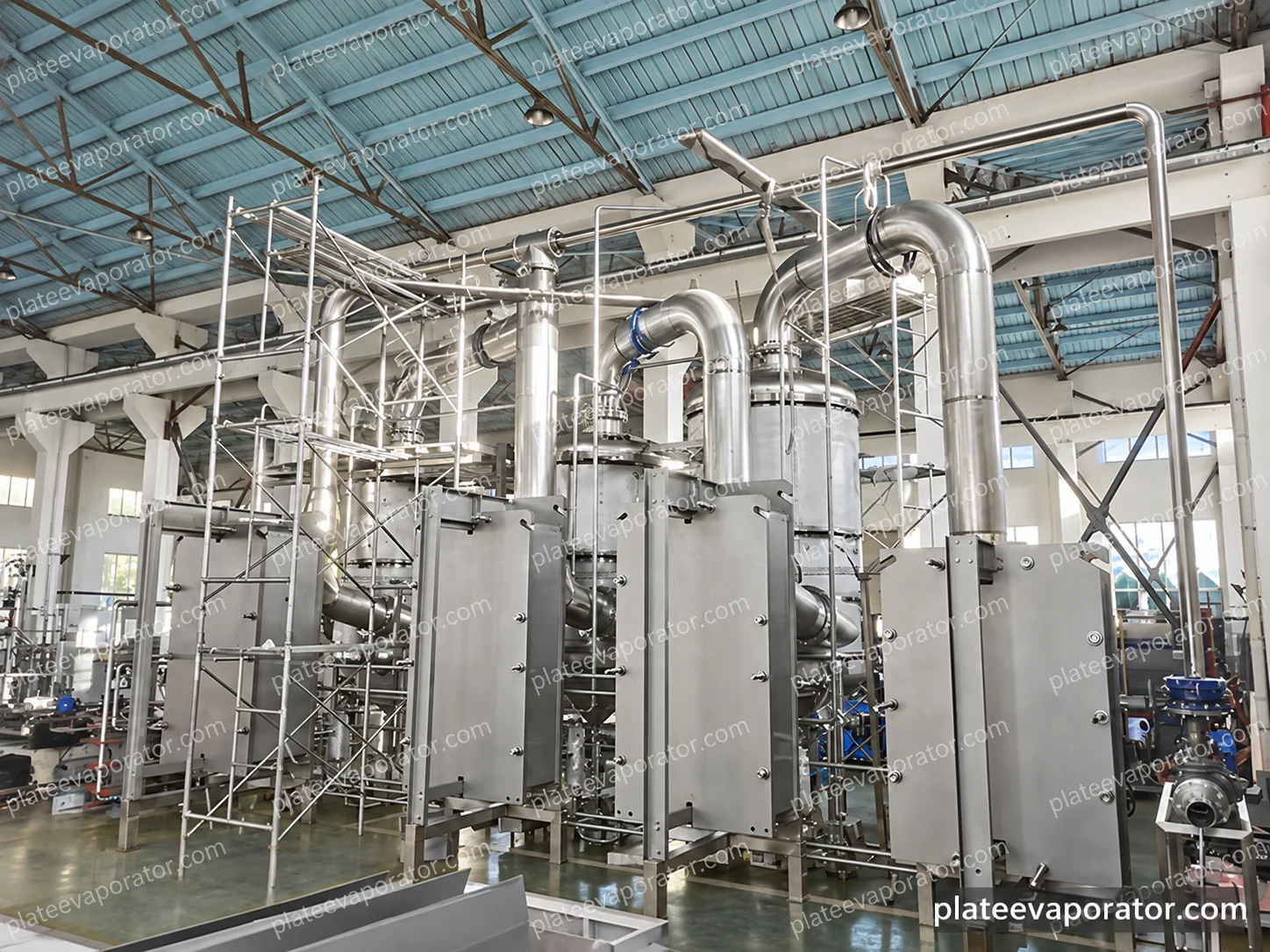
Plate packs supply heat. Separation vessels handle vapour and liquid. Pumps, condensation, vacuum and controls keep the concentrate moving through a coordinated system.
BEFORE YOU SPECIFY THE MACHINE
You do not need a complete engineering specification to begin. Start with the liquid, its incoming condition and what the concentrate must become.
Product, feed preparation, flow and inlet concentration. Include particles, foaming or viscosity concerns.
Product and duty selection →Outlet concentration, temperature criteria and the receiving process. Keep feed and water-removal quantities separate.
Prepare a quotation request →Heating, cooling, cleaning and installation access. Agree the equipment boundary and the utility conditions.
Utilities and connections →YOUR PRODUCT. YOUR PROCESS.
Discuss the liquid, the concentration duty and how the equipment will connect to your operation.
Start an equipment enquiry ↗