Heat transfer is one part of the evaporation duty
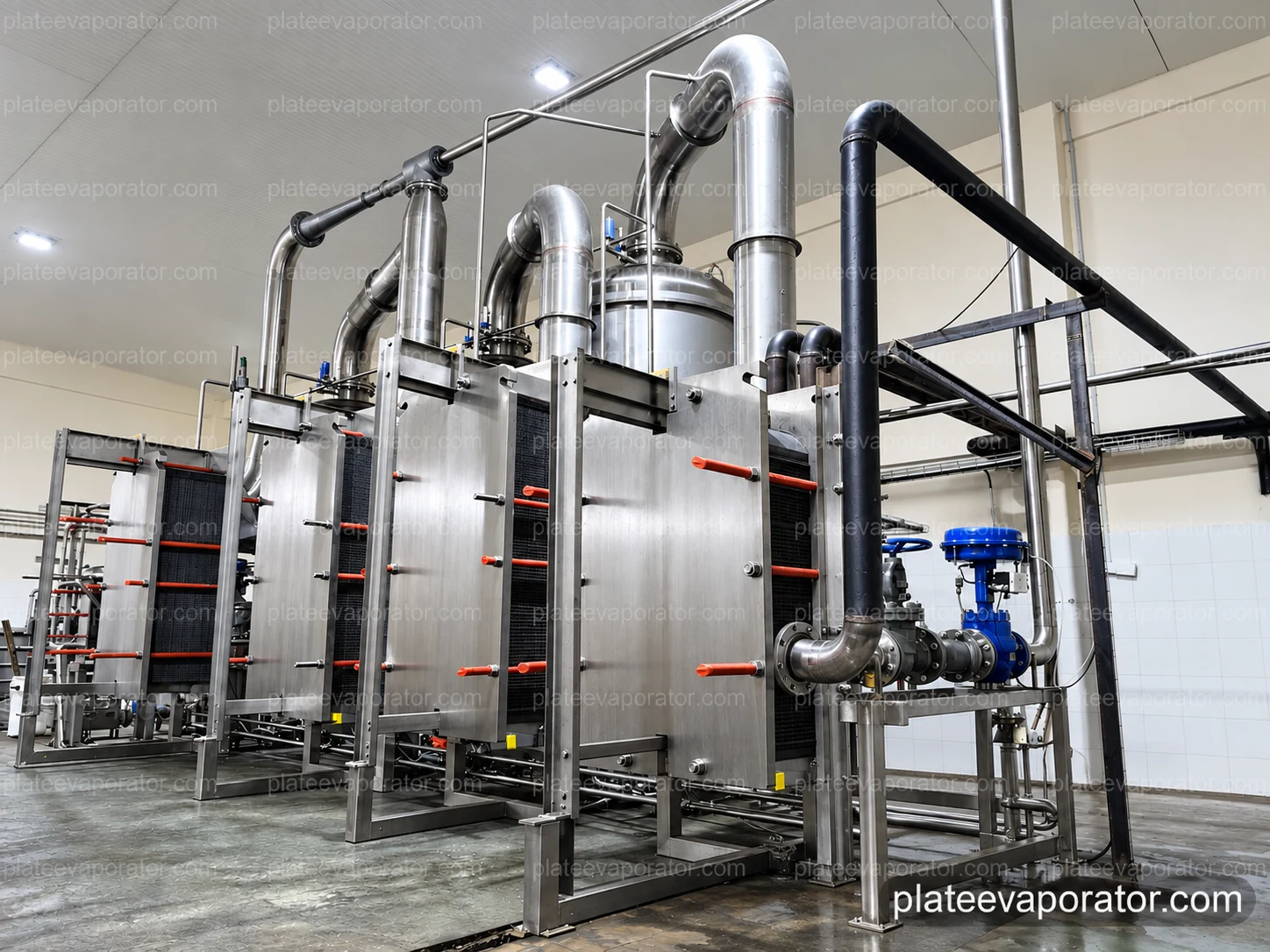
The plate pack provides adjacent passages for the selected product and heating services. Heat passes through the metal surface without requiring the heating medium to mix with the food liquid. The plate arrangement, connections and pressure conditions belong to the specified system design.
A plate heat exchanger can heat or cool a liquid without concentrating it. The evaporation system adds the conditions and equipment needed for boiling, vapour removal and concentrate handling. That is why a photograph of a plate frame alone does not describe the complete process.
Pressure sets the boiling condition together with the product
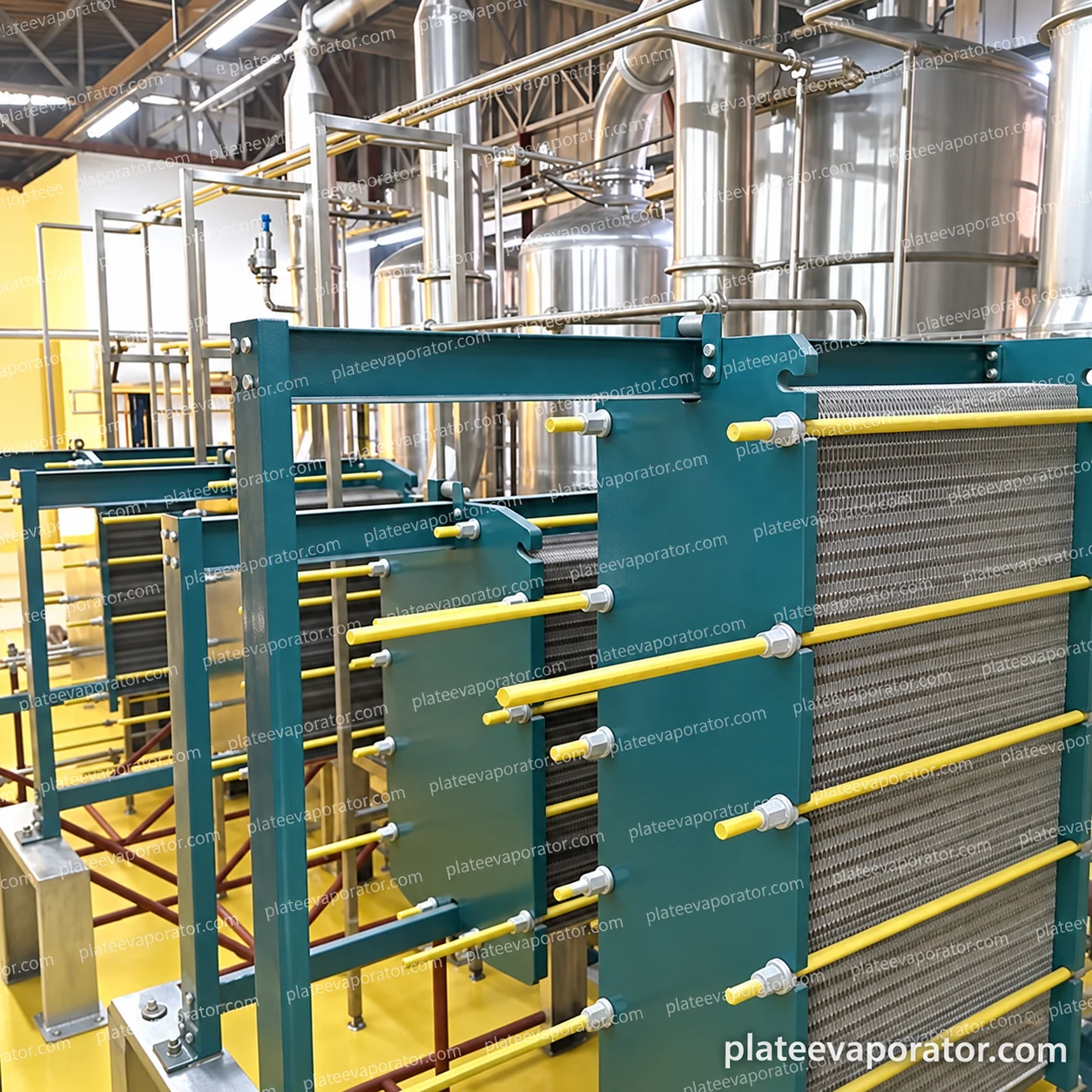
Operating below atmospheric pressure allows water to boil at a lower temperature than it would at atmospheric pressure. The actual boiling condition also depends on the dissolved material in the liquid. As concentration changes, so can the relationship between pressure and boiling temperature.
The working flow through a plate system follows its selected design. Plate construction does not by itself establish falling-film, rising-film or circulation behaviour. The process drawing and operating specification identify how liquid is distributed, where evaporation occurs and how the liquid returns or leaves.
Separate generated vapour from concentrated liquid
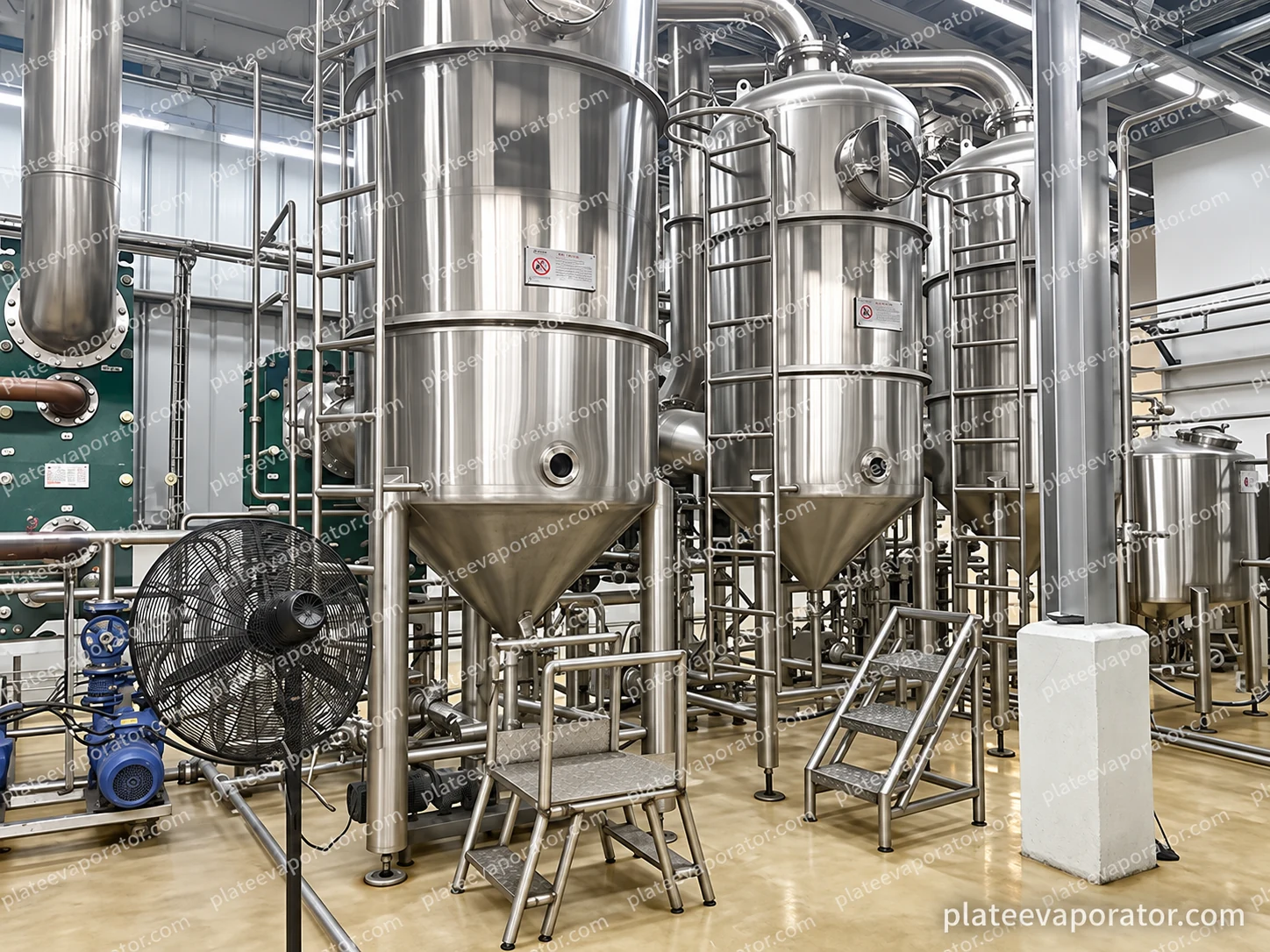
The separator provides a space in which generated vapour can leave the liquid stream. Liquid level, feed condition and discharge are coordinated so the process maintains its intended inventory. Foaming or excessive entrainment can move product into a stream intended to carry vapour.
The installed vessels have visible access ports, lower liquid connections and large upper pipework. Their internal separation arrangement follows the selected equipment. Vapour proceeds to the next heating duty or to condensation, while concentrate follows its own pumping and collection route.
Several effects reuse heat through connected stages
In a multi-effect arrangement, vapour from one effect provides heating energy to another effect operating at a suitable lower pressure. The pressure and temperature sequence must leave a useful heat-transfer driving force at each stage. Product properties and available heating conditions affect that sequence.
The final vapour and non-condensable gases need an appropriate condensing and vacuum arrangement. Condensate collection is separate from concentrate collection. The number of effects, a selected TVR arrangement and the product flow pattern are distinct design choices within the system.
Keep the connections coordinated through a run
The installed controls implement that sequence around the actual equipment. A temperature indication or running pump alone does not establish the concentration result. Product samples, flow measurements and operating records are considered together.
- Establish the required utility and receiving conditions before admitting product.
- Bring feed, heating and vacuum into the selected operating sequence.
- Maintain the specified liquid levels and product flow through the working range.
- Direct concentrate and condensate to their intended destinations.
- Use the defined stop, draining and cleaning sequence before the next production run.
Further detail
Questions about the equipment
Is every plate evaporator a falling-film unit?
No. Plate describes the heat-transfer construction. The selected distribution and product-flow arrangement determine how the liquid moves through the equipment. Use the process design for that system rather than assigning a flow regime from its external frame.