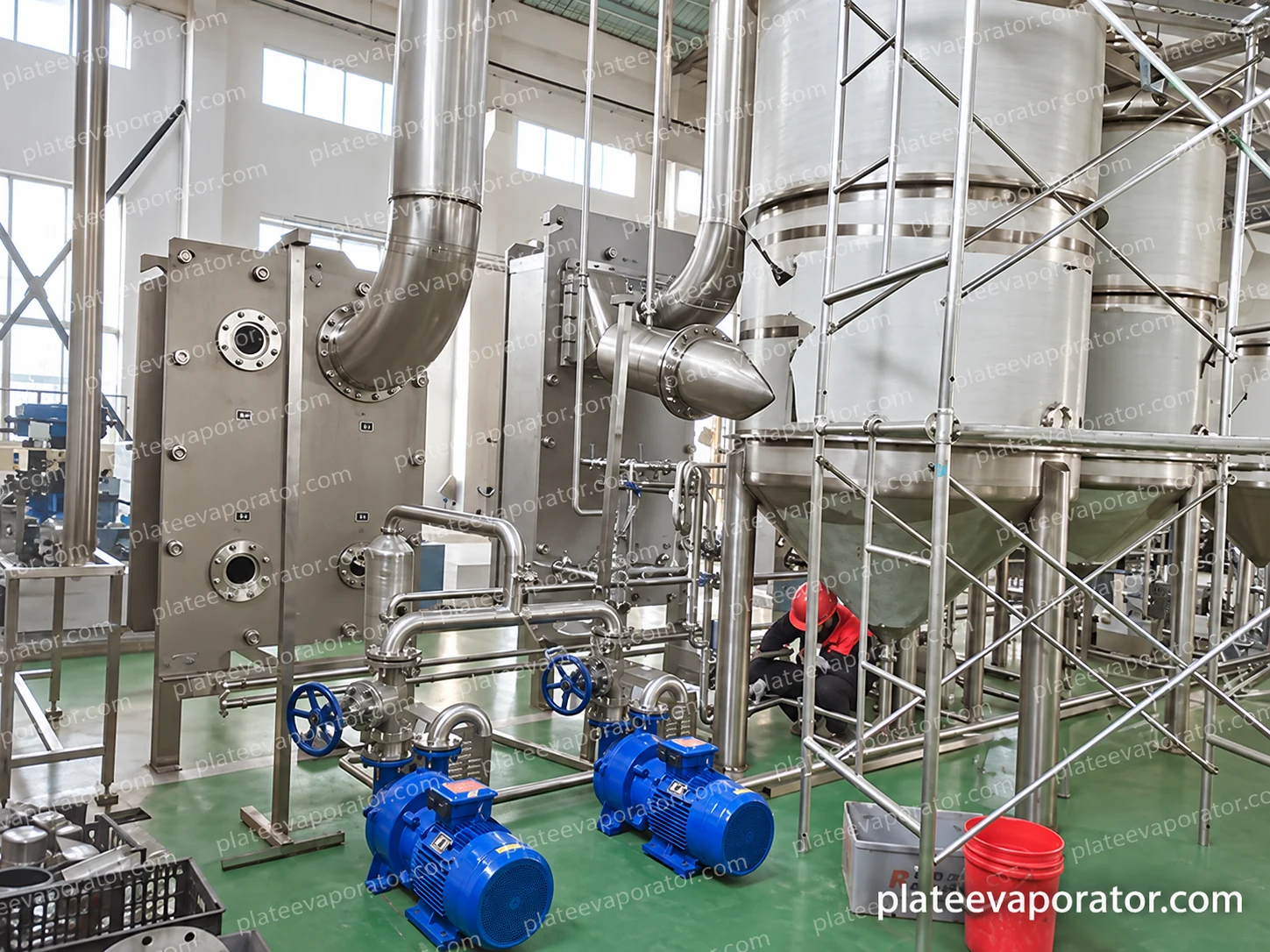
Describe the juice after preparation
Provide the fruit type, clarification method and remaining suspended matter. Clarified apple, pear and grape juices are relevant application categories. Pulp-rich material requires a different assessment from a low-solid aqueous juice.
The feed specification belongs at the evaporator inlet. Extraction and clarification equipment can be separate upstream interfaces; a complete fruit-processing factory is not included merely because a juice is being concentrated.
Set the aroma and temperature criteria
Concentration changes viscosity and increases the dissolved-solids level. Thermal exposure and handling of volatile components can influence colour, flavour and aroma. Set the quality targets and permitted operating conditions before selecting the thermal arrangement.
Vacuum lowers the boiling temperature relative to atmospheric operation. It does not by itself establish aroma recovery, a guaranteed retention percentage or a preservation treatment. Identify any additional recovery or product-treatment scope in the quotation.
Match the configuration to the full concentration range
Supply feed flow and temperature, inlet and target concentration, representative viscosity and particle information, and the available heating and cooling. Confirm the concentration measurement basis used for sizing.
Review the outlet pump, concentrate receiving temperature and cleaning behaviour at the target condition. A liquid that flows readily at the inlet can become significantly harder to distribute and transfer as water is removed.