A motive-steam-driven recovery function
The thermocompressor uses motive steam to entrain selected secondary vapour and produce a heating stream at a usable condition. The recovery duty is matched to the suction vapour, motive-steam supply and required discharge condition.
TVR describes the recovery method. It is not another evaporation effect and is different from mechanically driven vapour recompression. This equipment offering includes a selectable TVR configuration; an MVR supply is not implied.
Compare under the actual steam conditions
Supply the available steam pressure with its gauge or absolute basis, the usable flow, and how stable those conditions are during production. The operating range matters because the recovery function must remain coordinated with evaporation and liquid transfer.
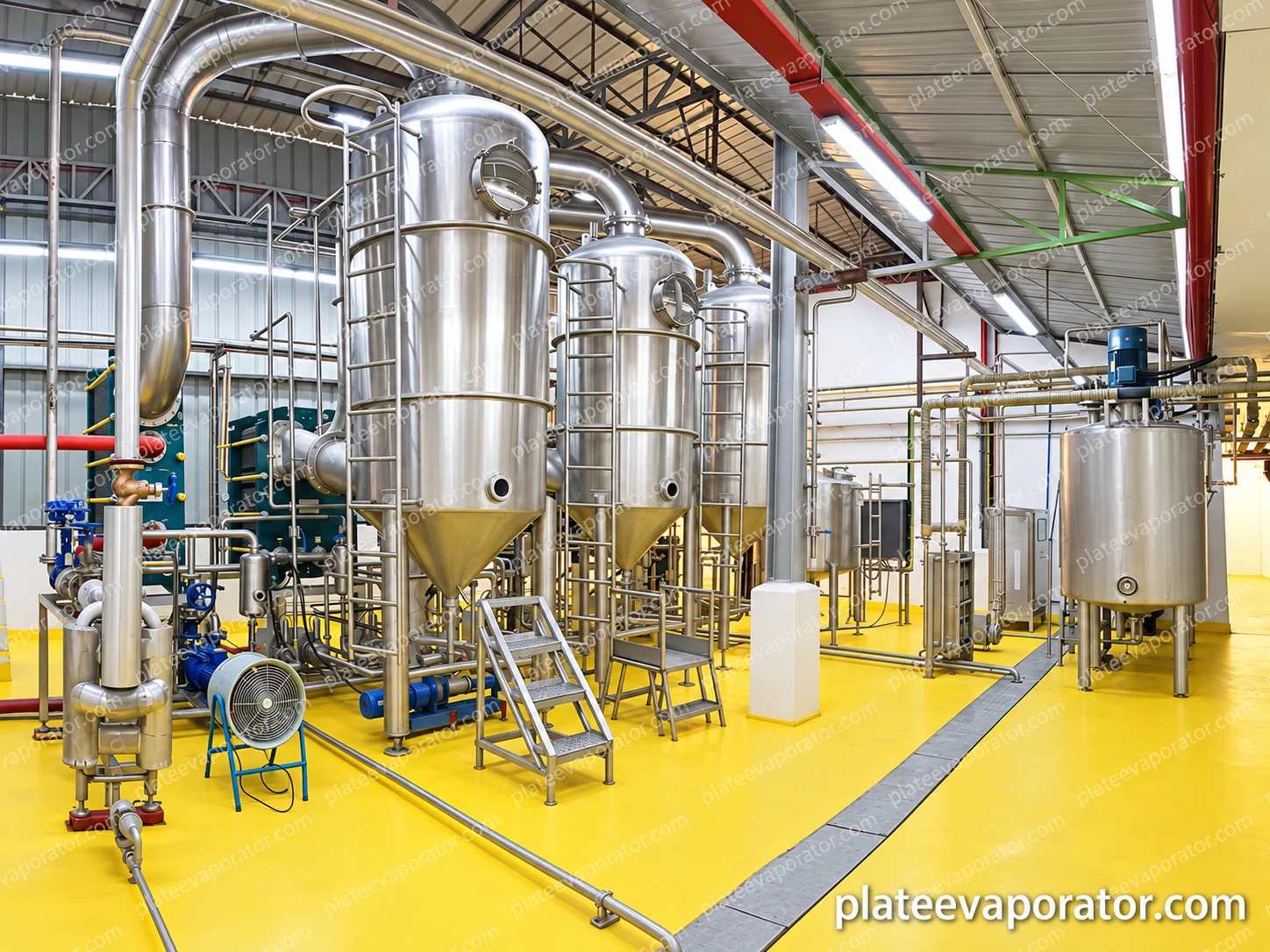
The expected live-steam demand belongs to the selected thermal design. A photographed TVR-assisted project demonstrates a configuration, but does not establish a fixed saving percentage for a different product or duty.
| Information | Why it matters |
|---|---|
| Motive steam pressure and flow | Thermocompressor selection and available heating |
| Secondary vapour condition | The recoverable stream and its process duty |
| Production working range | Recovery stability during throughput changes |
| Cooling and condensate interfaces | Remaining vapour and condensate handling |
Specify TVR with the complete package
Review the effect arrangement, start-up and shutdown sequence, pressure measurements and condensate routes together. Controls must support the operating conditions of the whole package, rather than treat recovery as an isolated attachment.
For a new project, compare the proposed TVR-assisted duty with the appropriate baseline at the same feed and target concentration. State what equipment, utilities and measurement basis are included in that comparison.