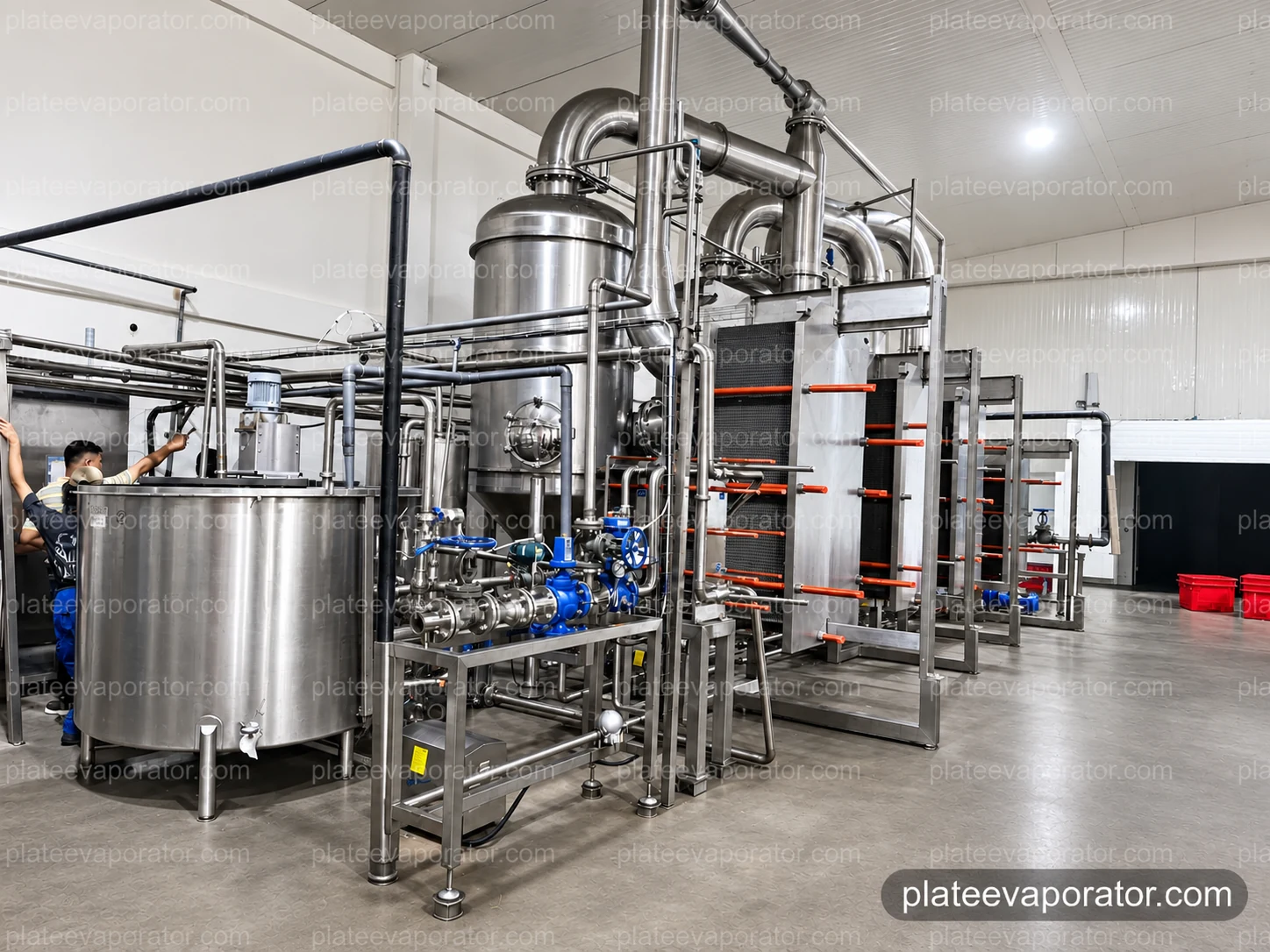
Heating and cooling set the thermal window
Record the available heating supply at the equipment boundary, with pressure and temperature basis, usable flow and expected variation. TVR selection additionally depends on the motive-steam conditions.
The condenser or terminal vapour duty needs a compatible cooling supply and return. Provide inlet temperature, permitted return condition and usable flow through the operating season. A cooling-water temperature alone does not establish sufficient heat removal.
| Interface | Information to establish |
|---|---|
| Heating supply | Supply condition, usable flow, stability and pressure basis |
| Cooling supply and return | Temperatures, flow and receiving capacity |
| Condensate | Collection destination, receiving pressure and return conditions |
Complete the non-thermal interfaces
Electrical and control requirements follow the selected pumps, vacuum equipment, instruments and control cabinet. Specify local power conditions and any instrument-air requirement for the offered valve and control arrangement.
Identify drains, condensate collection, access and the product receiving equipment. These interfaces must remain usable during production, cleaning and service, rather than only in the normal process drawing.
Define the CIP boundary and working range
A dedicated cleaning-supply module can be included, or the evaporation circuit can connect to a suitable existing plant supply. Establish solution supply and return, temperature control, recovery and discharge with the selected cleaning procedure.
Supply conditions are inputs to design, not a consumption guarantee. Ask for project-specific heating, cooling and electrical duties at the stated feed, concentration and effect arrangement, including the relevant working range.