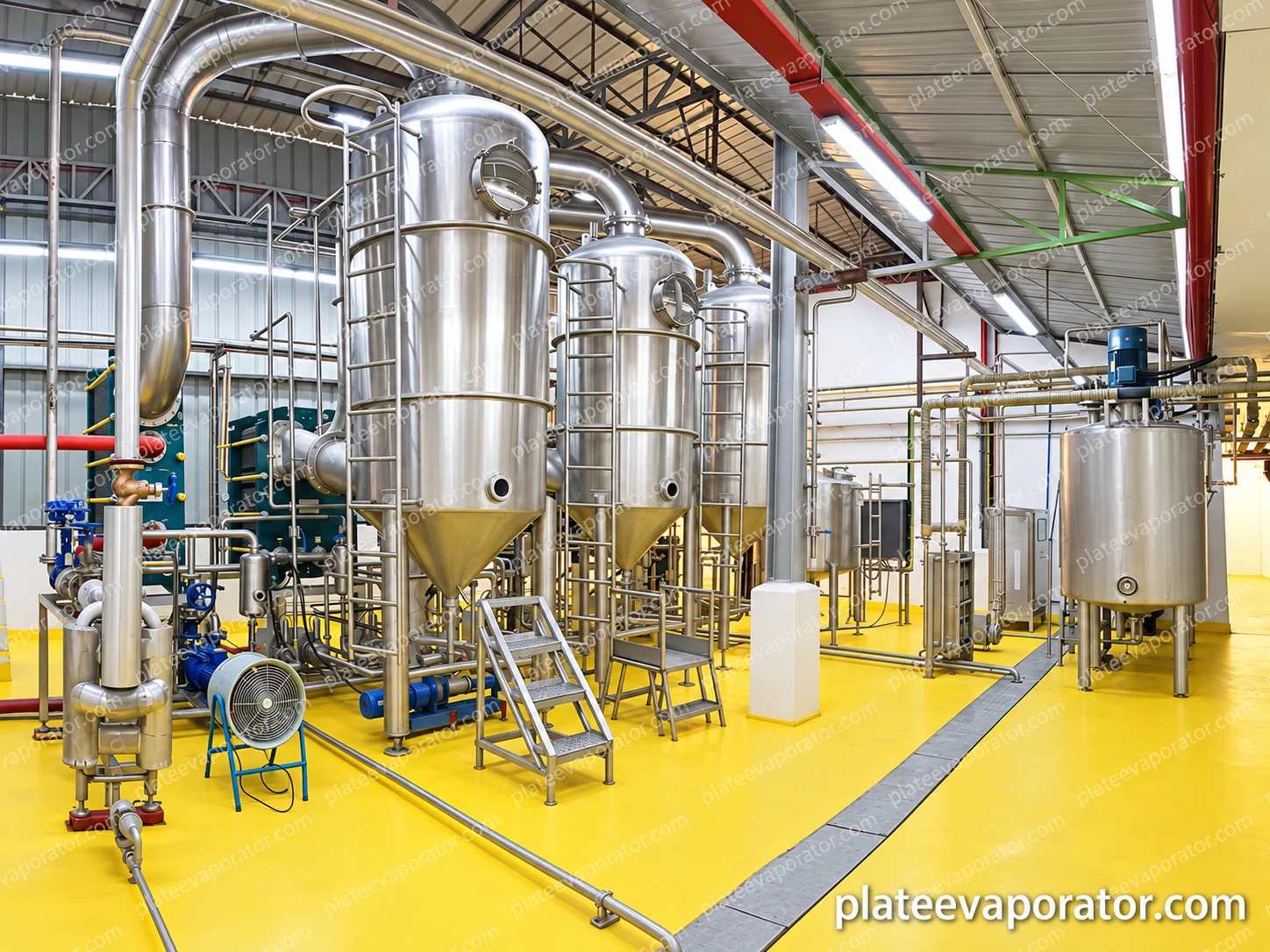
Coconut water: prepare the aqueous stream before concentration
Coconut water can contain fine particles, fibres and traces of oil from raw-material handling. Their removal affects the load entering the plate passages and the cleaning behaviour of the evaporator. In the Indonesian installation, a three-phase disc-separation step precedes the three-effect plate system.
The Philippine application uses a three-effect system with TVR for a specified coconut water concentration duty. These are liquid-processing installations; they do not make coconut meat pressing or preparation equipment part of every evaporation supply.
Different food liquids create different operating limits
These are application categories for configuration assessment, not evidence that every liquid in a category has the same behaviour. The intended concentrate and its downstream use determine the product criteria. A clear feed at its initial concentration can become substantially more viscous as water is removed.
| Application | Relevant feed characteristics | Concentration considerations |
|---|---|---|
| Clarified fruit or vegetable juice | Fine solids, dissolved constituents, acidity and aroma | Feed preparation, rising viscosity and volatile-product handling |
| Selected dairy liquids | Protein, minerals, fat and viscosity | Deposition on heated surfaces and equipment-compatible cleaning |
| Tea and coffee extracts | Extract composition, fine suspended matter and aroma | Preparation, thermal exposure and concentrate handling |
| Plant extracts and liquid seasonings | Soluble composition, particles, salts and cleaning residues | Material compatibility and the full concentration range |
Preparation protects the intended plate duty
Screening, clarification or phase separation can remove material that would otherwise enter narrow product passages or promote deposits. The appropriate upstream operation follows the actual feed; a separator or filter should solve a defined problem rather than be added to every liquid by default.
The product inlet specification covers suspended material as well as concentration. Large fibres, substantial pulp or severe fouling require a different assessment from a clarified low-viscosity liquid. Alternative heat-transfer or circulation arrangements can be compared where the intended plate configuration does not suit that duty.
Connect the concentrate to its next operation
The evaporator outlet is a concentrate at stated composition and temperature. It may proceed to cooling, a suitable buffer, another process or a selected filling system. That connection sets pump and pipe requirements and influences the acceptable interruptions in production.
Concentration alone does not establish the thermal preservation, package or storage specification of a finished food. Those requirements are developed for the actual product route. The evaporation supply identifies the outlet conditions and the equipment included up to that boundary.