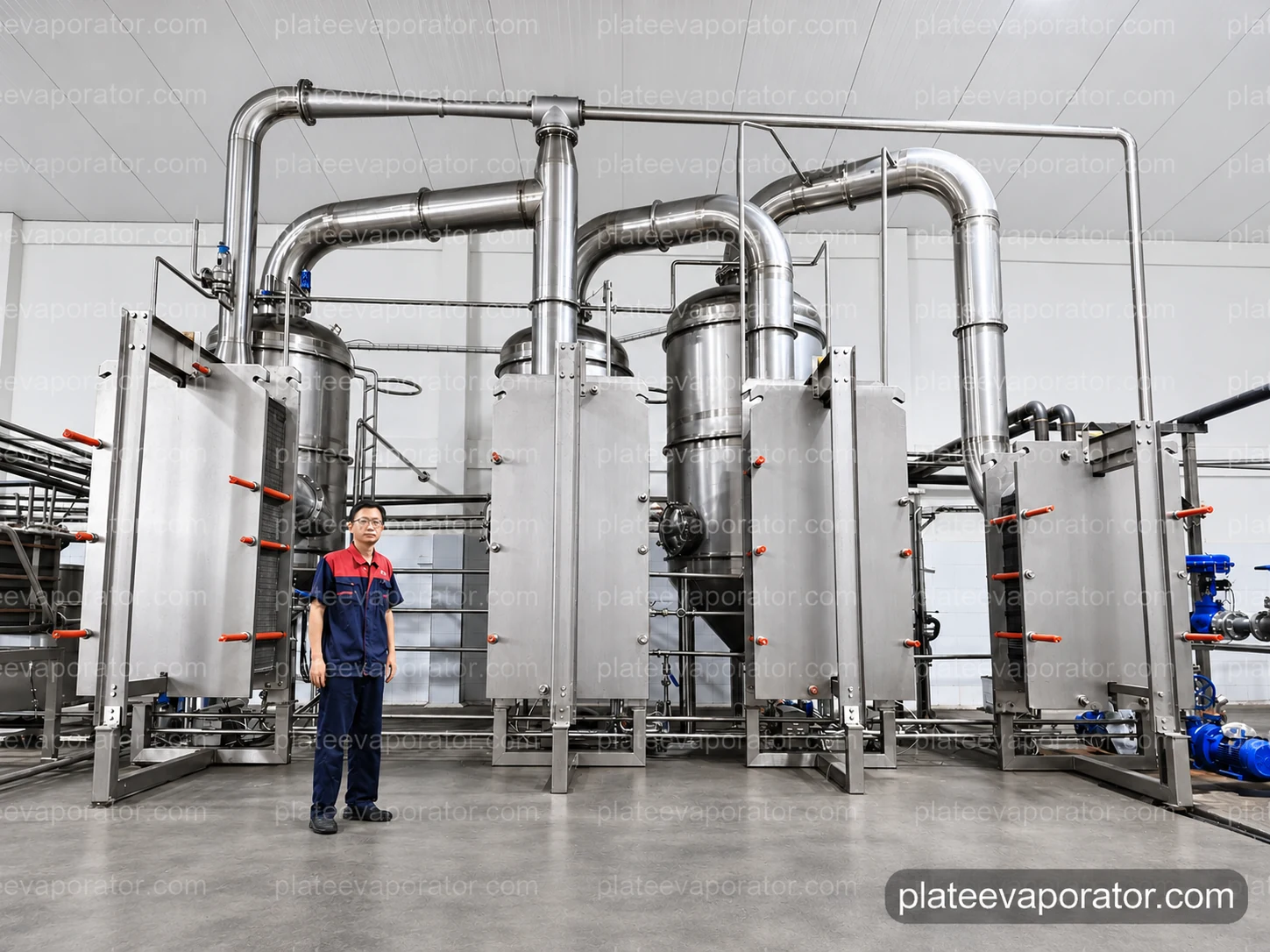
Separation precedes the plate section
The processing route receives coconut water, provides initial filtration and balance, then uses three-phase disc separation before preheating and evaporation. This preparation addresses fine solids and traces of oil in the aqueous stream. Concentrate collection connects the evaporator to the selected downstream handling.
The side photograph shows the installation as connected equipment: a process vessel in the foreground, lower pumps and valves, a visible plate stack, and the larger separation vessels behind it. These connections illustrate why product preparation and pumping belong in the system design.
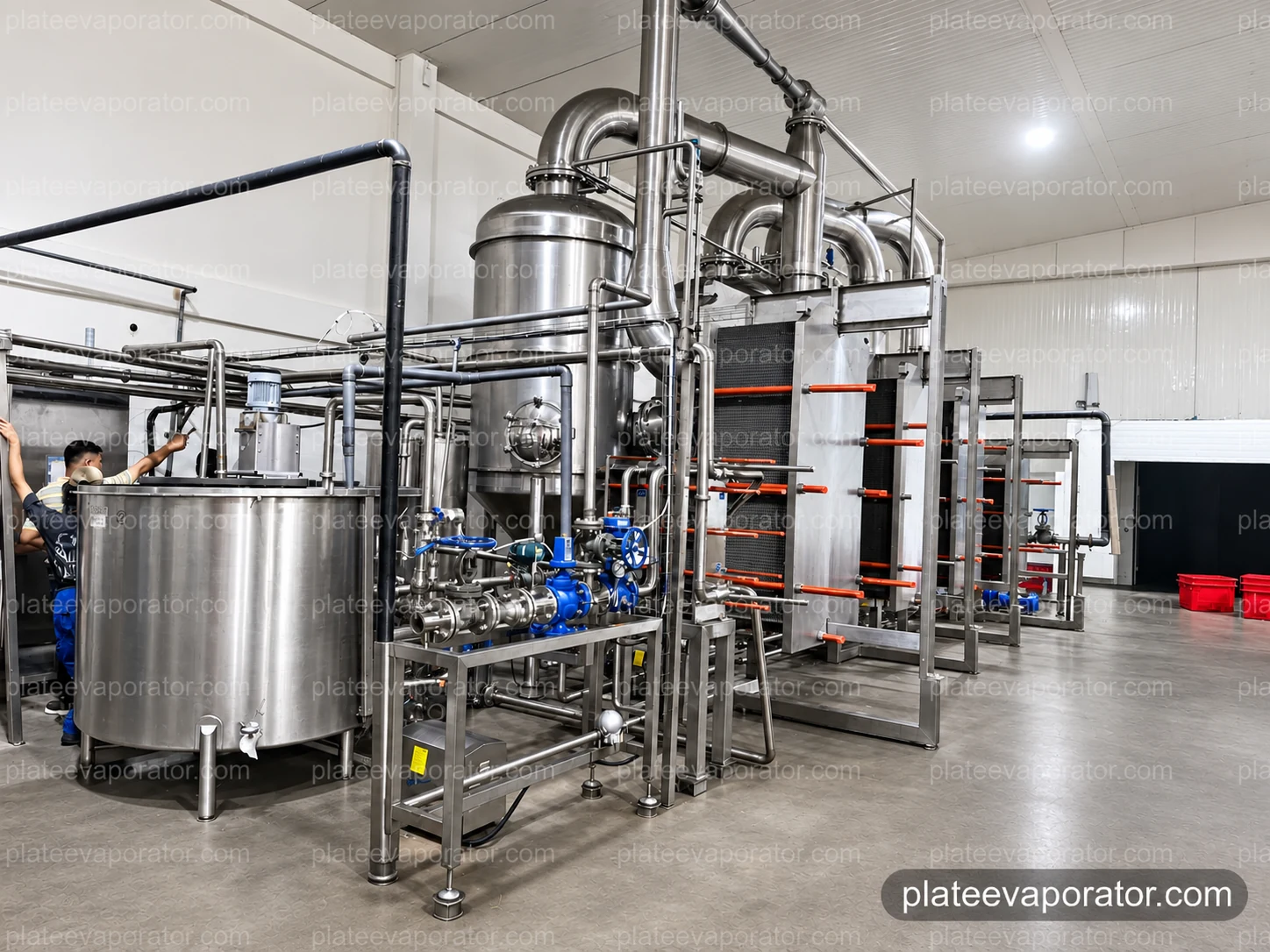
Plate stages are visible within the installed system
The plate frames and large interstage pipework can be seen together with the cylindrical separation vessels. Tie bolts hold the closed plate packs within their frames, while the arrangement leaves identifiable access points around the equipment.
The closed assemblies establish the actual plate construction. Their external view does not specify the internal channels, gasket material or product-flow regime. Those details belong to the selected equipment specification.
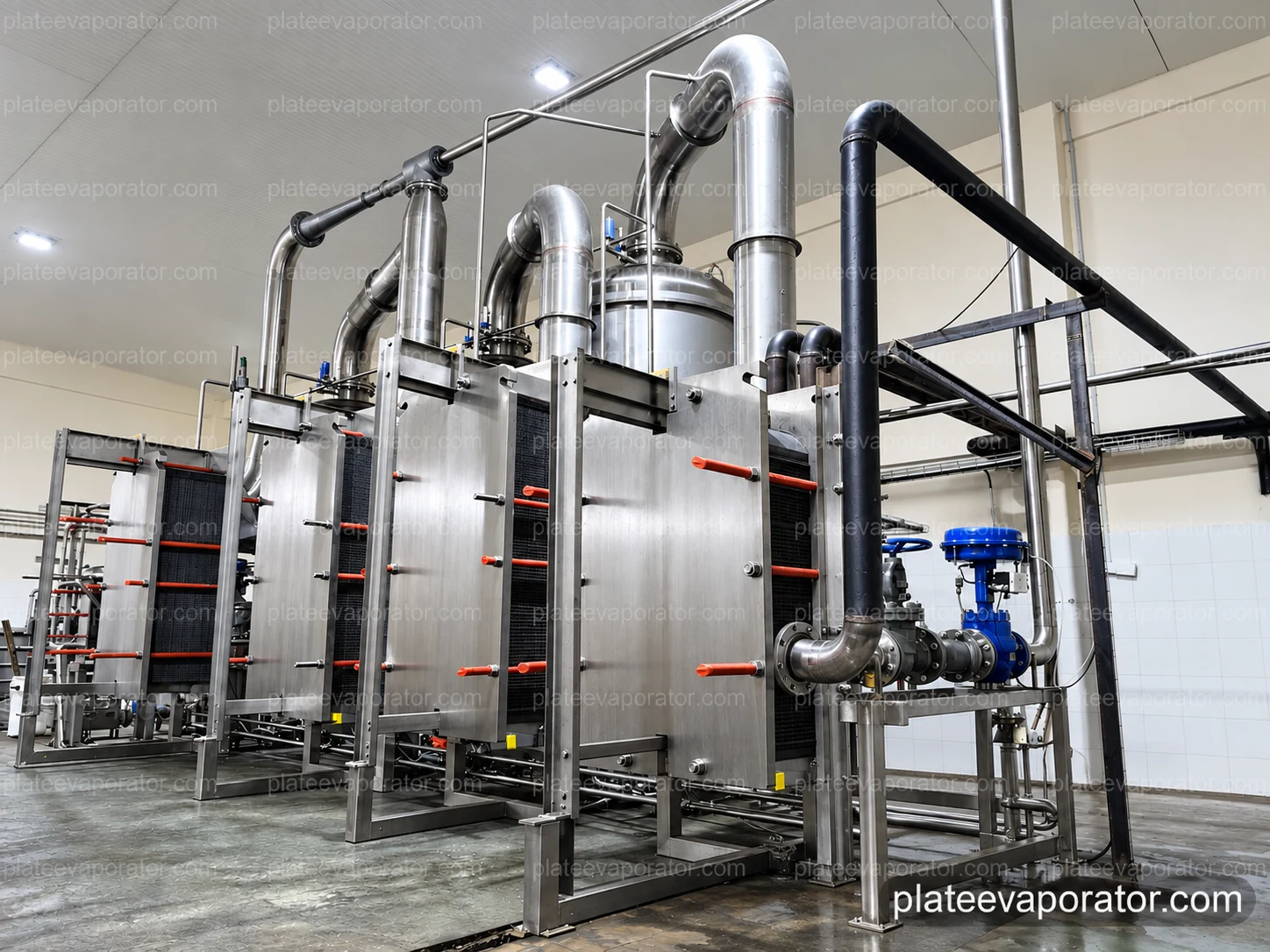
Keep evaporation and downstream packaging in their proper scope
The recorded system includes balance, preheating, concentration, product collection, control and cleaning functions. The stated downstream packaging plan is a one-litre four-side-sealed sachet; it is described as a plan rather than a demonstrated packaging delivery.
For selection, retain the meaning of the 6,000 L/h water-removal rating. A feed or concentrate mass flow requires its own composition, density and operating basis. The installation therefore supports an actual configuration example, without turning its rating into a general model capacity.