Identify the actual dairy stream
State the source of the whey or permeate, its total-solids basis, protein and mineral composition, pH and any residual fat or suspended material. A description such as dairy liquid does not establish a single evaporator specification.
Compare the intended outlet properties as well as the inlet. Concentration can change viscosity and deposit behaviour, influencing distribution, pumping and the usable production period between cleaning operations.
Connect heat deposition with the cleaning route
Protein and mineral deposits can reduce thermal performance and change pressure drop. Establish the acceptable product-contact temperature and run schedule with the actual liquid, rather than adopting a generic boiling temperature.
The cleaning specification must suit the deposits, product-contact materials and seals. Coordinate the plate circuit, separator outlets, pumps and return path. Opening a plate pack for inspection is a service operation separate from the normal CIP sequence.
Define the equipment and acceptance boundary
Provide representative feed and target-solids data, the intended daily run, heating and cooling conditions and the existing cleaning-supply interface. Product trials or application assessment can resolve uncertain fouling and concentrate behaviour.
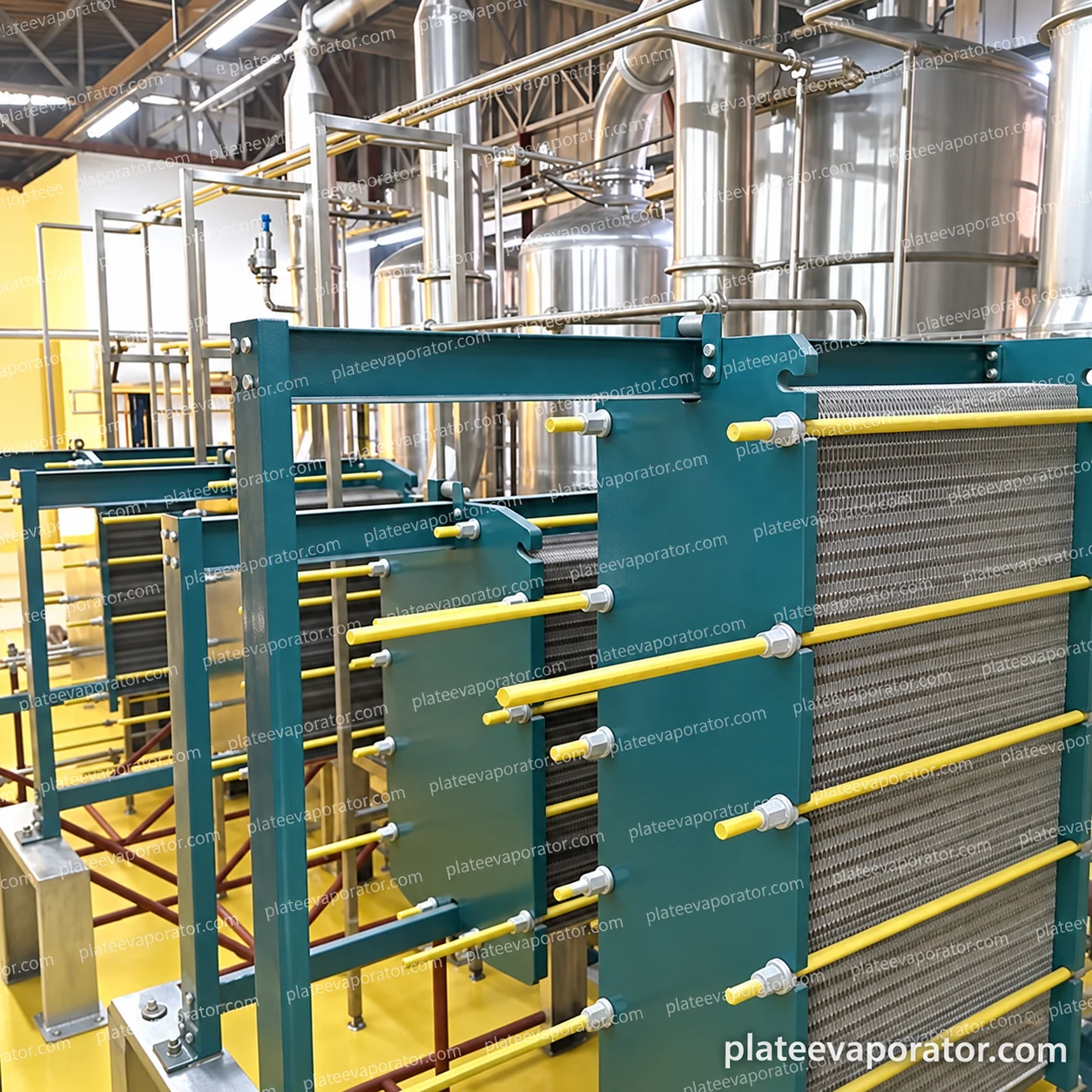
Any new duty and acceptance limits should identify the actual dairy stream. The coconut water installations elsewhere on this site demonstrate plate-system construction, rather than proof of a supplied dairy project or its performance.