Use a representative product to investigate the uncertain duty
Where a product trial forms part of the project, it should use material representative of the intended feed and target concentration. The assessment can follow flow behaviour, foaming, deposits and the resulting concentrate. A small quantity of unusually clean liquid may not represent the feed available during production.
The trial arrangement, material quantity, concentration range, sampling and cleaning assessment are agreed before the run. Any scale-up conclusion must account for differences in the flow path and operating conditions between the trial and selected production system. A trial plan does not imply a particular pilot machine is included in the supply.
Check the configuration that is being delivered
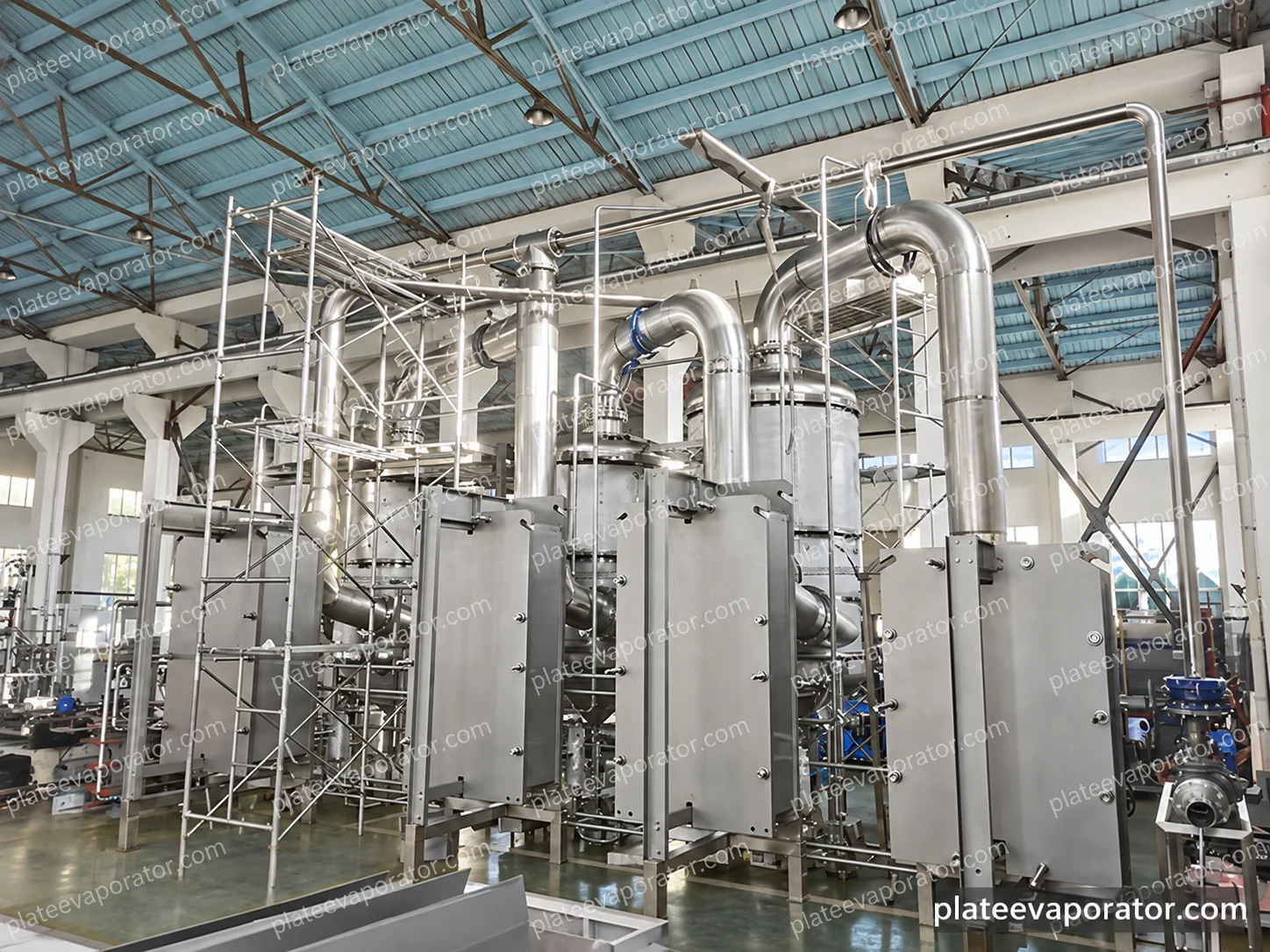
Equipment inspection compares the assembled system with the agreed scope: plate assembly, vessels, pumps, instruments, connections, controls and access. Identification and documentation link the physical components to the selected configuration. Applicable mechanical, electrical and functional checks are defined in the inspection programme.
A water run can help verify circulation, connections and specified controls. It does not establish the fouling behaviour, aroma result or sustained concentration performance of a food liquid. Product-duty claims need the corresponding product conditions and measurements.
Measure the streams and utilities on a common basis
Volumetric readings require the relevant density where the balance uses mass. Brix and total non-volatile solids are not interchangeable for every food. Record the method used rather than combining different measurement bases into one apparent recovery result.
| Assessment | Useful evidence | Condition that must accompany it |
|---|---|---|
| Water-removal duty | Consistent feed, concentrate and other-stream measurements | Composition, inventory changes, units and test interval |
| Concentrate result | Samples and the specified product measurements | Sampling location, temperature and analytical method |
| Utilities | Relevant heating, cooling and electrical measurements | Boundary, service conditions and steady or transient operation |
| Control operation | Responses to specified operating states and test events | Selected sequence, permissions, limits and records |
| Cleaning | The agreed cleaning and inspection results | Soil, procedure, connected route and restart conditions |
Include the installed interfaces and the operating cycle
Site checks follow the delivered equipment through its connected feed, heating, cooling, vacuum, concentrate and cleaning routes. The intended stop and restart responses are assessed alongside steady operation. Product collection and downstream equipment need to be available for the agreed run.
The acceptance record states the test material, duration, operating window, included equipment, measurements and criteria. Installation, commissioning and production operation are distinct milestones. A successful component check should not be described as acceptance of a complete food process.