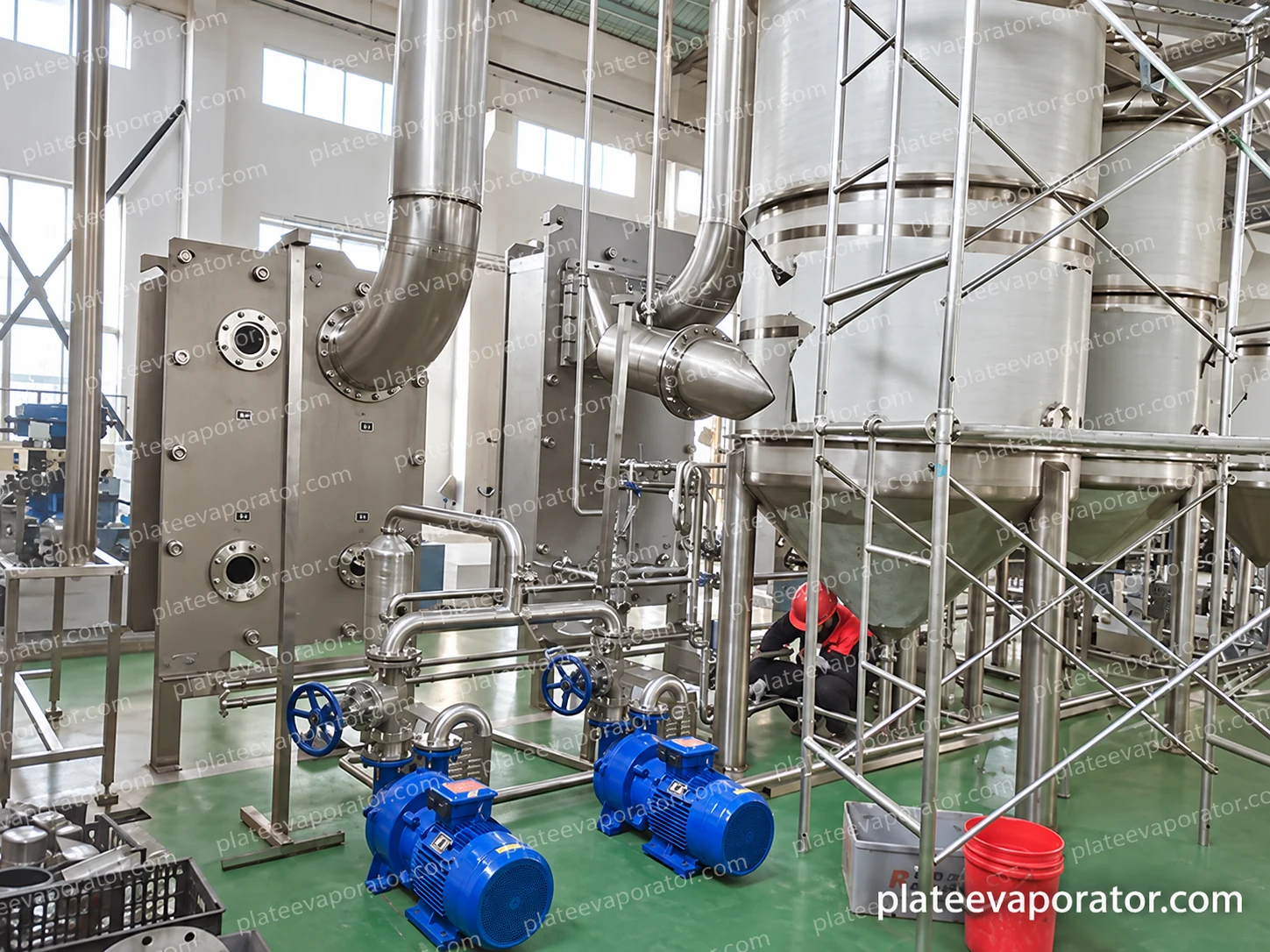
Describe composition and residual material
Provide the liquid-seasoning composition, dissolved-solids measure, pH and relevant salt information. Include filtration, remaining fine solids and any changes in composition during the expected production schedule.
Concentration increases the level of dissolved constituents while reducing the liquid stream. Viscosity, precipitation or deposit formation can become limiting even when the incoming material appears readily pumpable.
Specify compatible product-contact parts
Select the metal and seals with the actual product chemistry, temperatures and cleaning exposure. A generic stainless-steel label is insufficient for a salt-containing or acidic liquid duty. Confirm the specification of plates, vessels, pipework and wetted pump parts.
CIP chemistry and the rinse or return arrangement must work with those same components. Cleaning conditions should address the actual residues within the documented limits of the selected materials.
Choose the thermal arrangement after the product assessment
Supply the feed flow, concentration basis, target outlet condition, foaming behaviour and available utilities. Product assessment should confirm that the concentrate remains suitable for the intended plate passages and separation duty.
Where heavy solids, high viscosity or rapid deposition make the plate arrangement unsuitable, compare another heat-transfer configuration. The first enquiry can establish these conditions before fixing the machine scope.