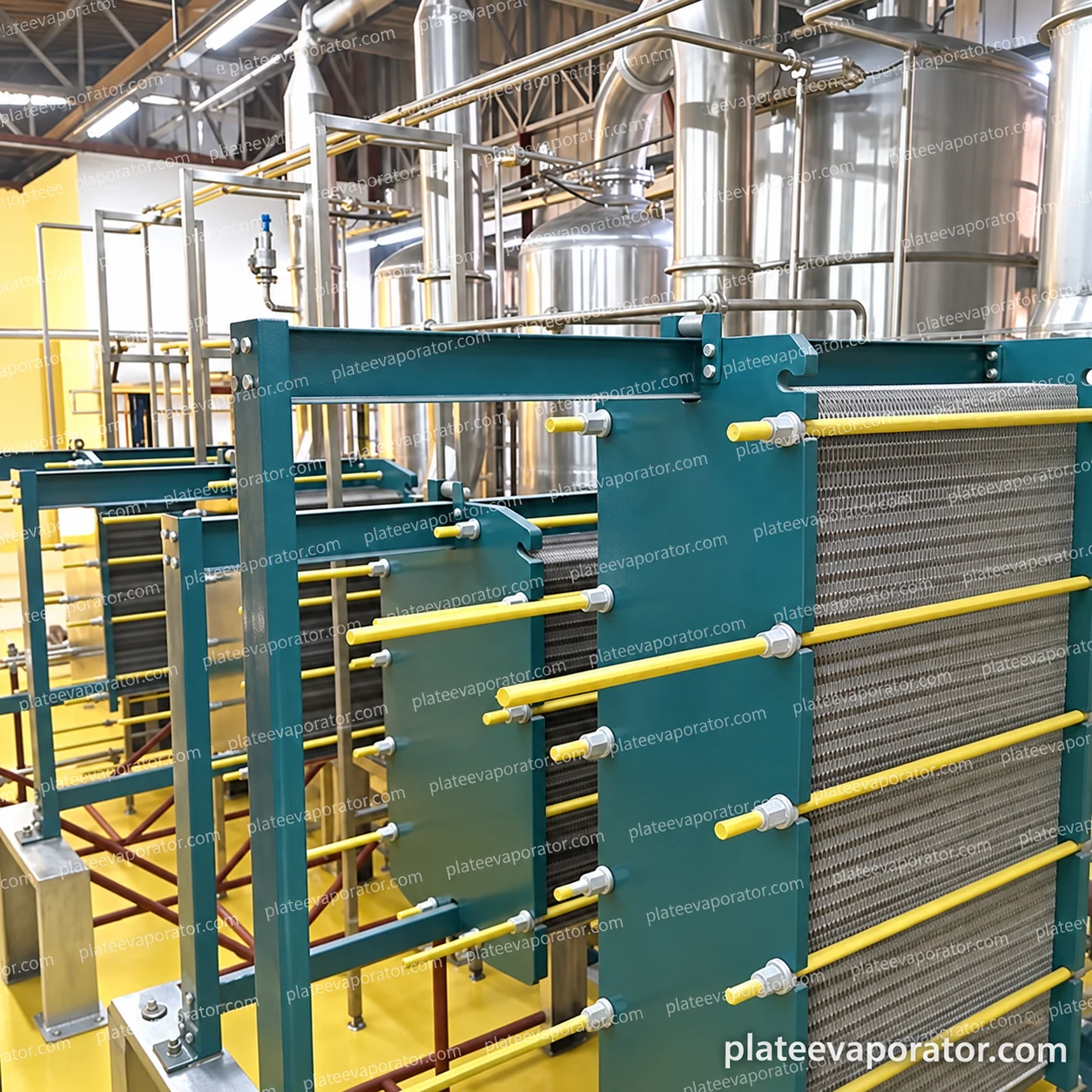
What changes with the heat-transfer surface?
Neither column describes a universal particle limit, viscosity rating or cleaning result. Those limits require the specific equipment dimensions, operating conditions and product. A compact arrangement can still need substantial service space to open or remove working components.
| Design consideration | Plate arrangement | Tubular arrangement |
|---|---|---|
| Product path | Passages formed by the selected plate assembly | Passages formed by the selected tubes and connections |
| Working configuration | Distribution, ports and passage arrangement follow the design | Tube geometry, distribution and circulation follow the design |
| Service access | Opening and plate access depend on the assembly and seals | Inspection and cleaning access depend on tube and bundle construction |
| Material suitability | Product and cleaning compatibility of plates, seals and joints | Product and cleaning compatibility of tubes, seals and joints |
Film and circulation behaviour must be specified separately
In a film arrangement, distribution and surface wetting are central to operation. A circulation arrangement moves liquid through a defined loop and separates generated vapour according to that process. Plate systems can use different liquid-flow designs; the word plate does not select one of them.
When comparing alternatives, use the process route, operating range and product condition for each candidate. An external photograph of a tall vessel cannot establish the heat-transfer internals, and a plate frame cannot establish how the whole liquid circuit runs.
Evaluate the concentrate, not only the incoming liquid
Prepared low-viscosity food liquids are the main application focus for the plate system shown here. Increasing viscosity, coarse fibres, suspended solids or deposit formation can change the suitability of the proposed passages and operating arrangement. The feed preparation and final concentration are considered together.
A different surface or circulation arrangement may be appropriate for a difficult material. That comparison should preserve the same product target and production basis. It should also include the amount of liquid retained in the system, the cleaning route and the ability to operate across normal variations in feed.
Compare usable operating results
Useful comparisons measure water removal, concentrate condition and utilities during a stated operating period. They also account for start-up, interruptions, cleaning and restart. Peak output with a clean surface is different from sustained production between cleaning cycles.
The comparison can include access to product-contact parts, identified service components, inspection procedures and the space needed at installation. These details turn a choice of heat-transfer surface into a practical equipment decision.