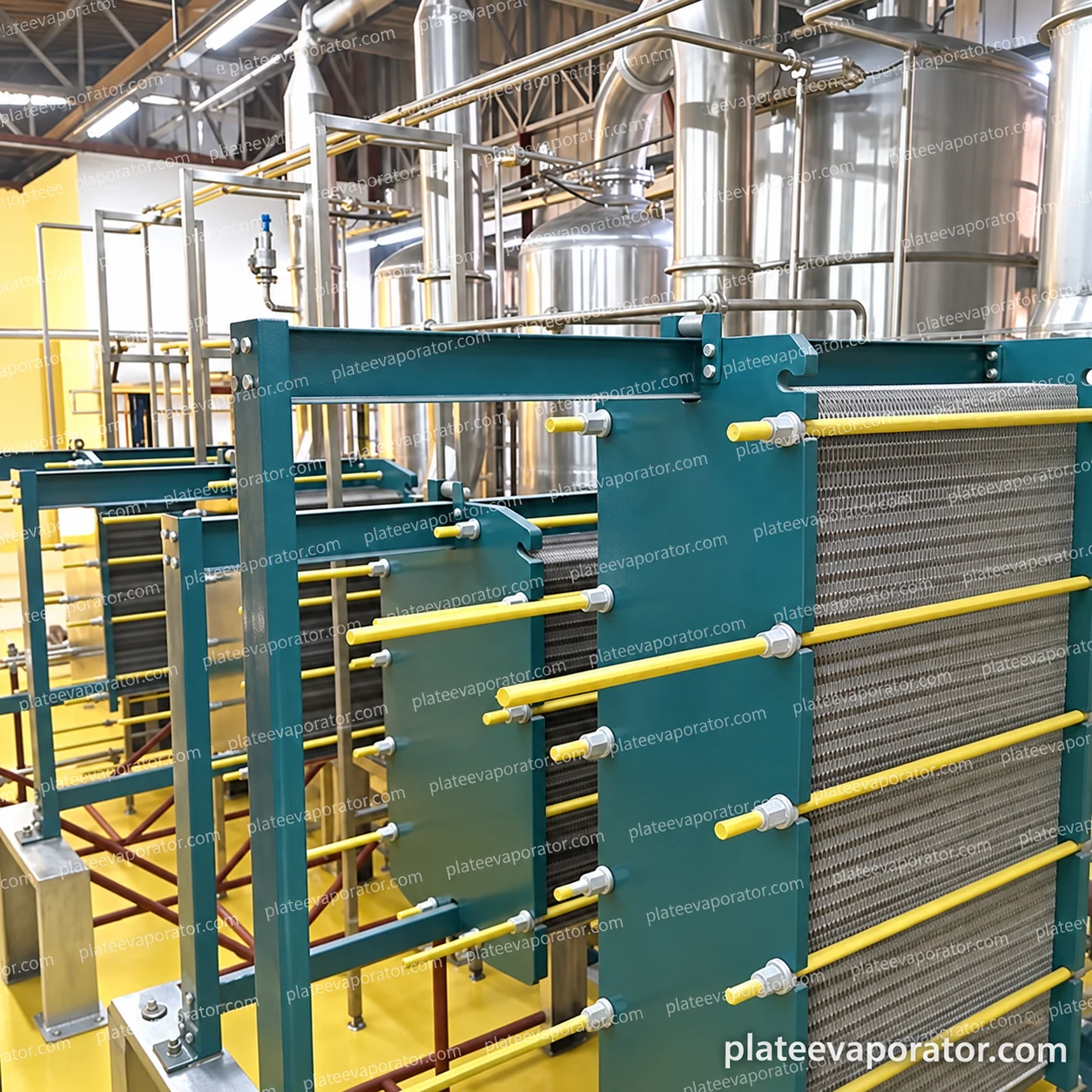
Fouling follows the material and the operating conditions
Particles, precipitated material or heat-related deposits can affect the product passages. A change in viscosity as concentration rises may also change flow and heat transfer. Feed preparation and the working conditions should therefore be assessed together rather than treating all fouling as a cleaning-station problem.
Operating trends help identify a developing change. Compare duty, temperatures, pressure conditions and product flow against the relevant baseline, with feed composition and utility conditions recorded. A lower evaporation rate can have several causes, including the available heating or vacuum condition, so the equipment should be investigated as a connected system.
Trace cleaning liquid through the actual product route
The CIP route must reach the intended plate passages, vessels, pumps, valves and connecting pipework, then return or discharge through the selected path. Valve positions, trapped volumes and drainage affect that route. A supply connection beside the evaporator is only one part of a working cleaning circuit.
Flow, cleaning chemistry, temperature and contact time are selected for the equipment materials and the residue. The sequence can include rinsing and the appropriate cleaning stages, but their conditions follow the installed system and the food-processing hygiene requirements. Return measurements support the procedure; they do not alone prove that every concealed surface was reached.
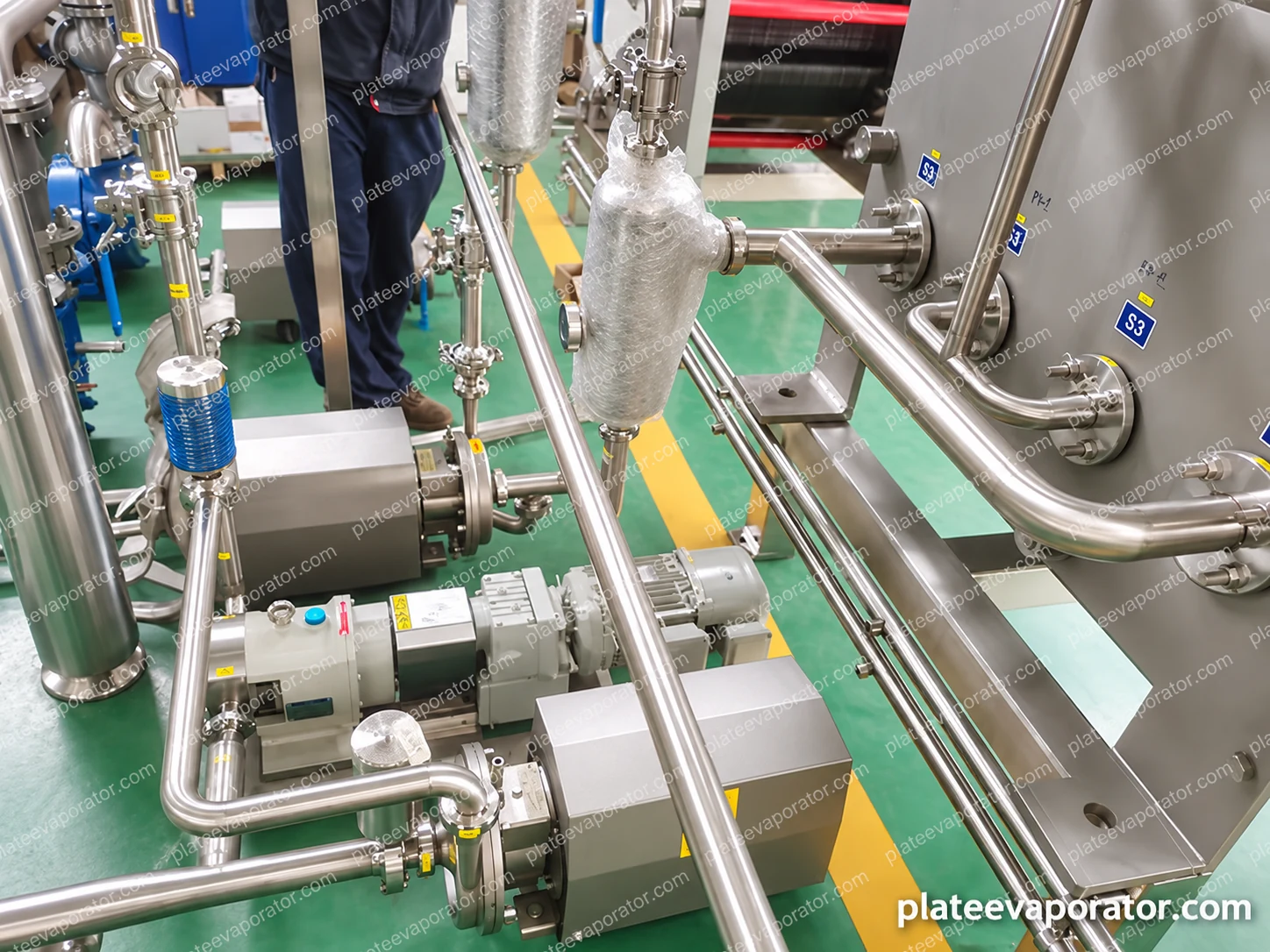
Open and reassemble the pack using its equipment procedure
Before opening a plate pack, the system is isolated, drained and brought to the conditions required by its service procedure. The installed layout leaves working room for the frame and removable parts. Plate identification, order, orientation and the specified closing arrangement matter to correct reassembly.
Inspection covers the accessible plate surfaces, sealing areas and connection condition. Replacement seals must match the actual plate assembly and its product, cleaning and temperature duty. The visible frame colour or the word food-grade does not identify a gasket material or its operating limits.
Verify the cleaning result and restore the production route
Cleaning readiness is separate from the preservation requirements of the final food product. The evaporator, a downstream thermal section and aseptic packaging can have different preparation procedures and boundaries. Their connections need to remain clear when cleaning services are shared.
- Complete the cleaning and rinse checks defined for the installed equipment.
- Check the required valves, drains and return connections before product admission.
- Refit and secure any opened components using the equipment procedure.
- Restore the applicable heating, vacuum and product-flow start sequence.
- Record the cleaning interval and observations alongside the following production run.
Further detail
Questions about the equipment
Can one standard CIP recipe be used for every food liquid?
The residue, plate and seal materials, connected equipment and hygiene requirements determine the cleaning procedure. A cycle that suits one liquid or assembly is not automatically compatible with another.