Review the parts that create the process
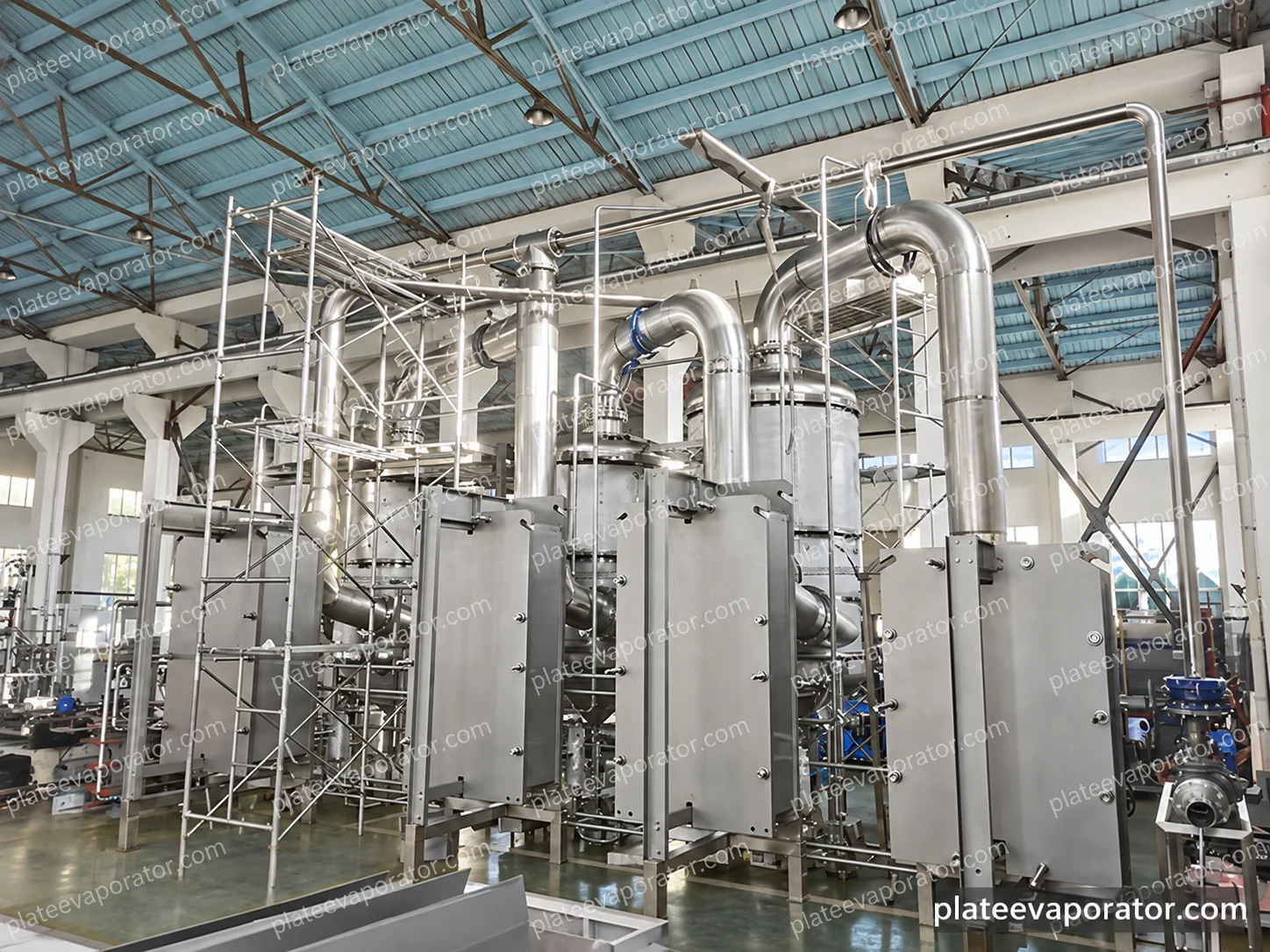
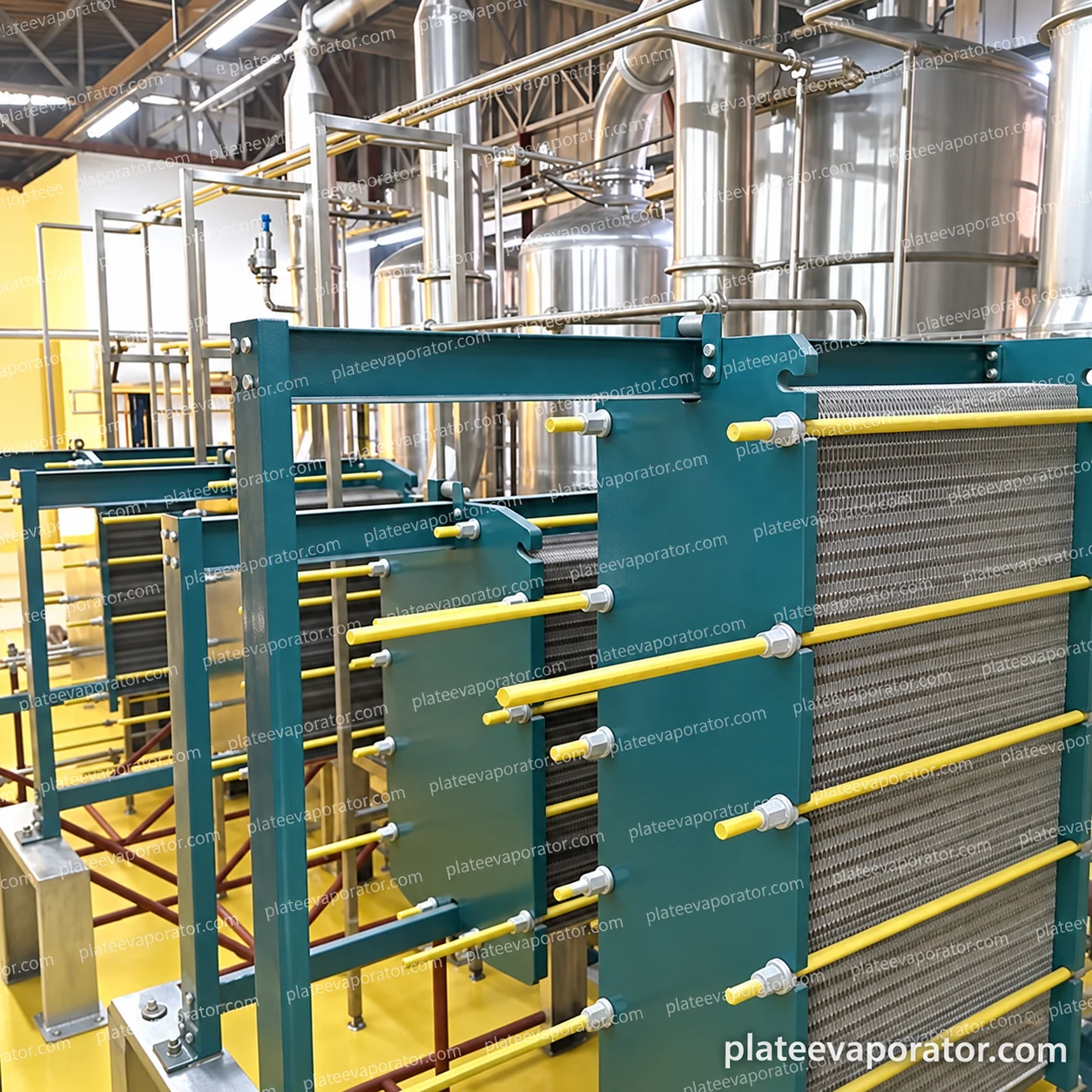
The assembly view shows plate frames beside separation vessels, with large interconnections and lower product pipework. The clamped plate-pack detail shows the support and closing arrangement. Pump and valve photographs add the smaller connections that carry liquid between these larger assemblies.
These features support a practical construction review: working-part access, component identification, connections and the space needed for inspection. The supplied material grades, seals and other component specifications belong to the chosen configuration and its documentation. External appearance alone cannot establish every product-contact material.
Integrate mechanical equipment and controls as one scope
The process arrangement identifies plate stages, separation, product transfer, heating, vapour, condensate and vacuum connections. The equipment layout adds access, removal clearances and interfaces to site services. A component list becomes useful when those relationships are clear.
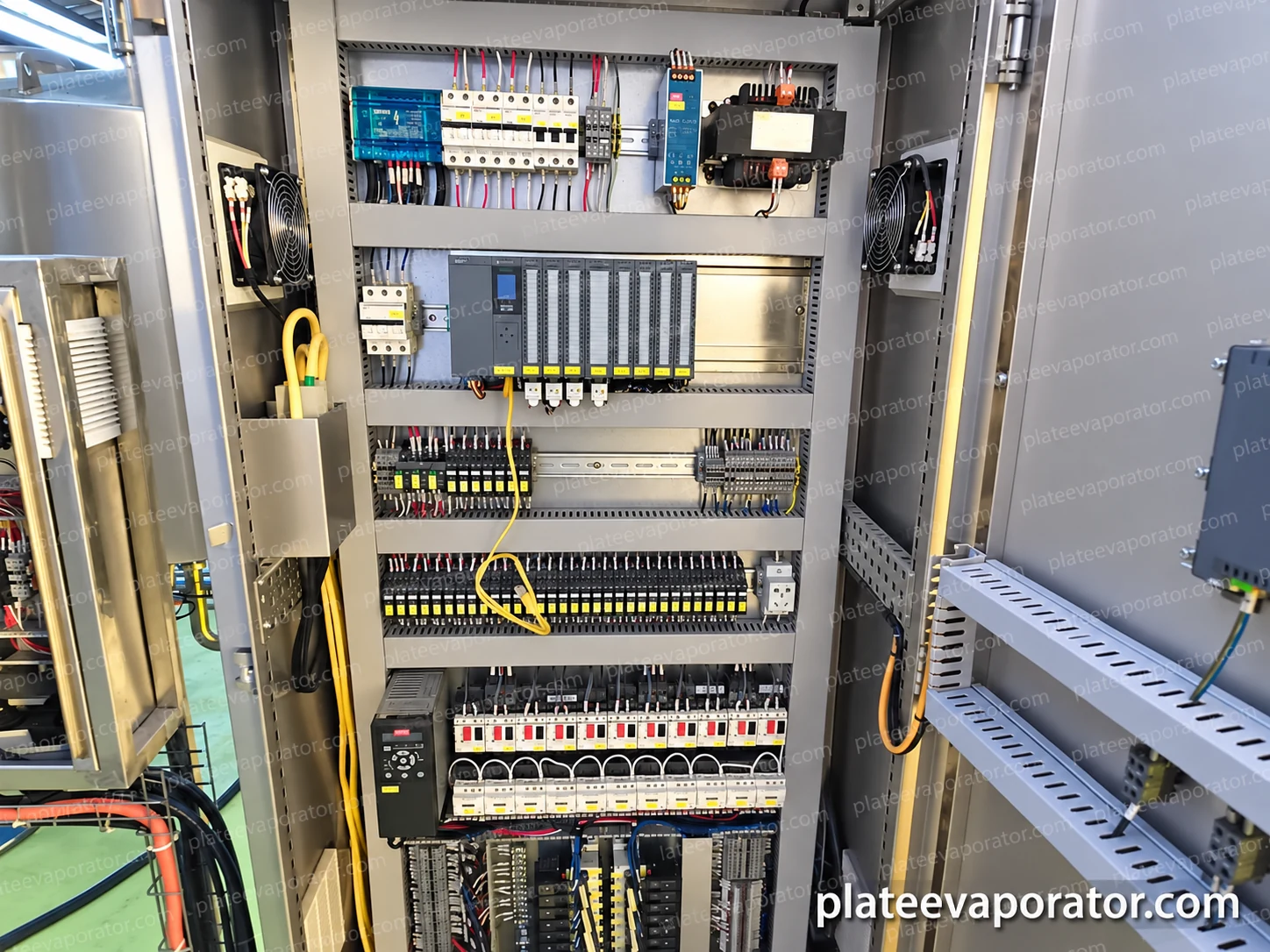
Control hardware and instruments are coordinated with the selected operating sequence. The photographed cabinet from the Philippine installation shows the physical PLC and I/O arrangement, electrical protection and field connections. The project documentation defines which functions, signals and operating records are supplied.
Provide the information needed at installation and in service
The document schedule follows the equipment order. Plate and seal identification, pump information and instrument details help ensure that maintenance is performed on the actual delivered configuration. Spare parts are selected for that configuration rather than inferred from a generic evaporator photograph.
- Identification of the supplied system, modules and selected components.
- Process and layout information with the applicable product and utility connections.
- Operating and control information for the installed configuration.
- Cleaning, opening, inspection and maintenance procedures for the relevant assemblies.
- Selected service parts and the agreed inspection, commissioning and training scope.
Connect delivery support to the site work
Installation and commissioning support can be organised around the supplied package and the site responsibilities. Positioning and connection work depend on the actual shipping modules, building access, utility readiness and interface to existing plant. Operator training follows the selected operating, cleaning and maintenance procedures.
The inspection and acceptance programme distinguishes assembly checks, functional runs and product-duty assessment. The Indonesian installation provides a documented example of a system reported installed, commissioned and operating. Its application record does not replace the agreed acceptance conditions for a new project.