Compare what each quotation includes
A plate heat exchanger quotation and an evaporator quotation can both mention plate area, but that number does not describe the same delivery. Ask each supplier to state the inlet and outlet conditions, included equipment and utilities at the same boundary.
| Buying question | Plate heat exchanger | Plate evaporation system |
|---|---|---|
| Primary duty | Heat or cool a fluid | Remove water and concentrate a liquid |
| Phase change | Normally none in the product | Water boils; vapour is separated |
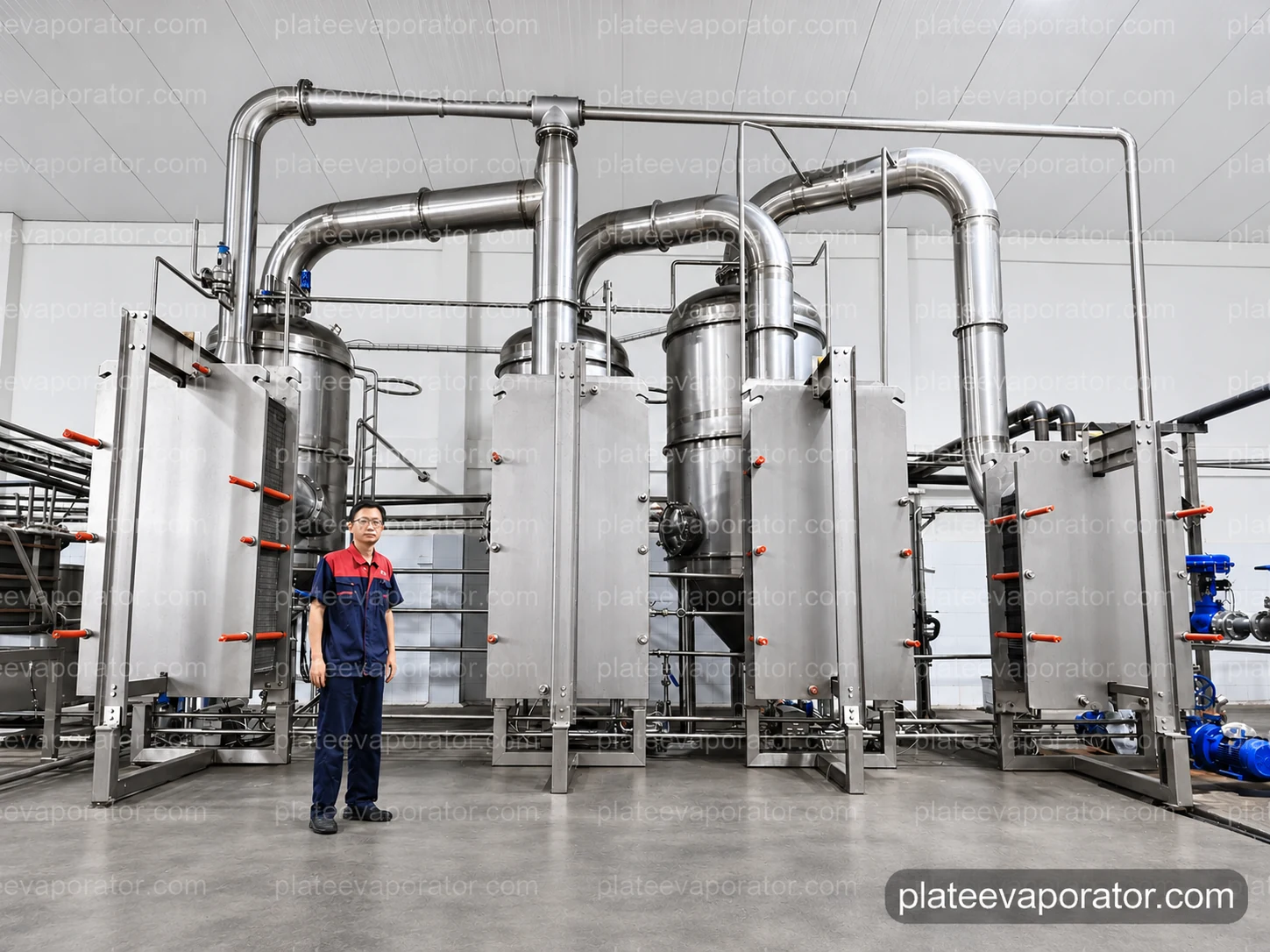
| Core equipment | Plate pack, frame and connections | Plate section, separator, vacuum, condenser, pumps, controls and CIP |
| Performance basis | Heat duty, temperatures and pressure drop | Feed, concentrate, water removal, product conditions and utilities |
| Utility scope | Heating or cooling media | Heating, cooling, vacuum, electrical, condensate and cleaning |
| Product limits | Passage design, viscosity, particles and fouling | All of those plus boiling, foaming, separation and concentrate handling |
| Typical quotation | Thermal design and plate assembly | Process and utility design plus integrated equipment scope |
When a plate heat exchanger is the right purchase
If the task is to heat, cool, pasteurise or recover heat without removing water, an evaporator adds equipment and operating complexity that the duty does not need. A heat exchanger or a matched thermal process line is the appropriate starting point.
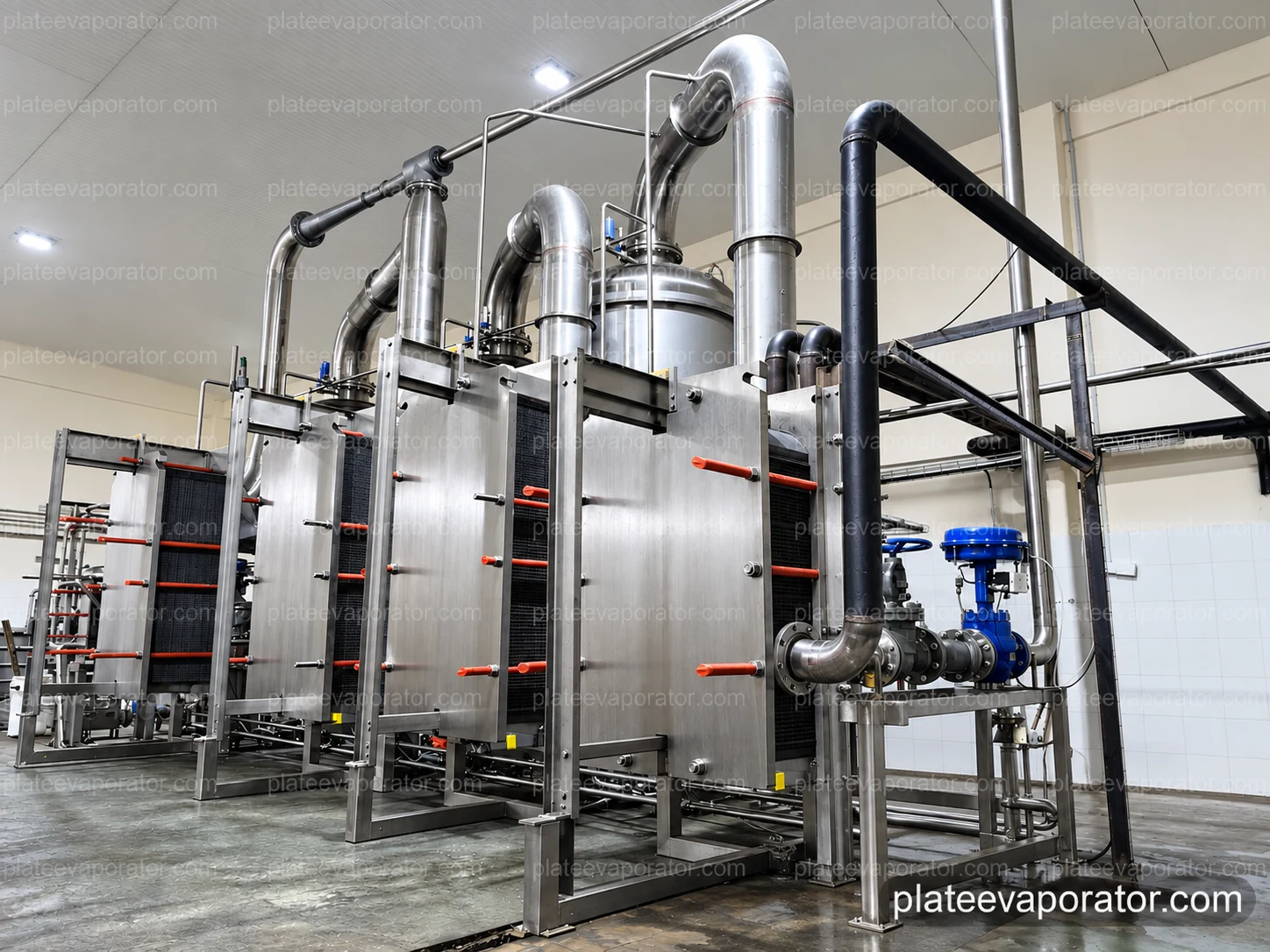
If the task is to increase solids, reduce volume or remove water, the duty is evaporative. A heat exchanger may still appear inside that system as a preheater or condenser, but it does not replace the evaporation and separation scope.
Compare evaporator quotations on one duty
Use the same feed flow, composition and target concentrate for every offer. State whether concentration is measured as Brix, total solids or another basis, and provide density where volumetric flows are used. Require each quotation to identify feed, concentrate and water-removal quantities separately.
Ask for the effect arrangement, heating and cooling conditions, vacuum and condensate scope, materials and seals, CIP connections, controls, documentation, testing and installation boundary. A lower plate area or a higher headline flow is not a complete comparison without those conditions.
| Quotation item | What to make explicit |
|---|---|
| Duty | Feed, target, water removal, temperature limits and operating hours |
| Thermal design | Effects, TVR if offered, heating and cooling conditions |
| Equipment scope | Plate section, separator, condenser, vacuum, pumps, controls and CIP |
| Materials | Wetted metal, seals, documentation and component schedule |
| Performance | Basis, tolerances, utilities and acceptance test |
| Services | Installation, commissioning, training, spares and response scope |
Make the first decision from the product, not the plate
Write one sentence for the duty: "Concentrate [liquid] from [inlet] to [outlet] at [flow] while keeping [temperature or quality limit]." If that sentence needs water removal rather than temperature change, you are comparing evaporators. If it only needs heating or cooling, compare heat exchangers.
The next constraints are the feed's viscosity, particles, fouling and foaming across the concentration range. Those determine whether a plate evaporator is suitable and which distribution or circulation arrangement should be assessed.
Further detail
Questions about the equipment
Can a plate heat exchanger be used as an evaporator?
Not as a stand-alone heat exchanger. Evaporation requires a controlled boiling condition, vapour-liquid separation, terminal vapour handling, concentrate transfer and coordinated controls. A heat exchanger can be a preheater or condenser inside an evaporation system, but it does not provide those functions by itself.
Is a plate evaporator simply a larger plate heat exchanger?
No. Size is not the distinction. The evaporator adds a phase change and the equipment needed to separate and handle the vapour, maintain vacuum and deliver a concentrate. The plate section may look similar; the process scope is different.
Which machine is cheaper?
The question cannot be answered from the plate pack or a headline capacity. A heat exchanger and an evaporation system have different scopes. Compare quotations only after fixing the same product duty, utilities, materials and included equipment.
Can one supplier quote both?
A supplier may offer plate heat exchangers and evaporation systems, but the quotation should still identify which scope is being supplied. Check the process boundary rather than assuming that a shared plate technology means the same delivery.